
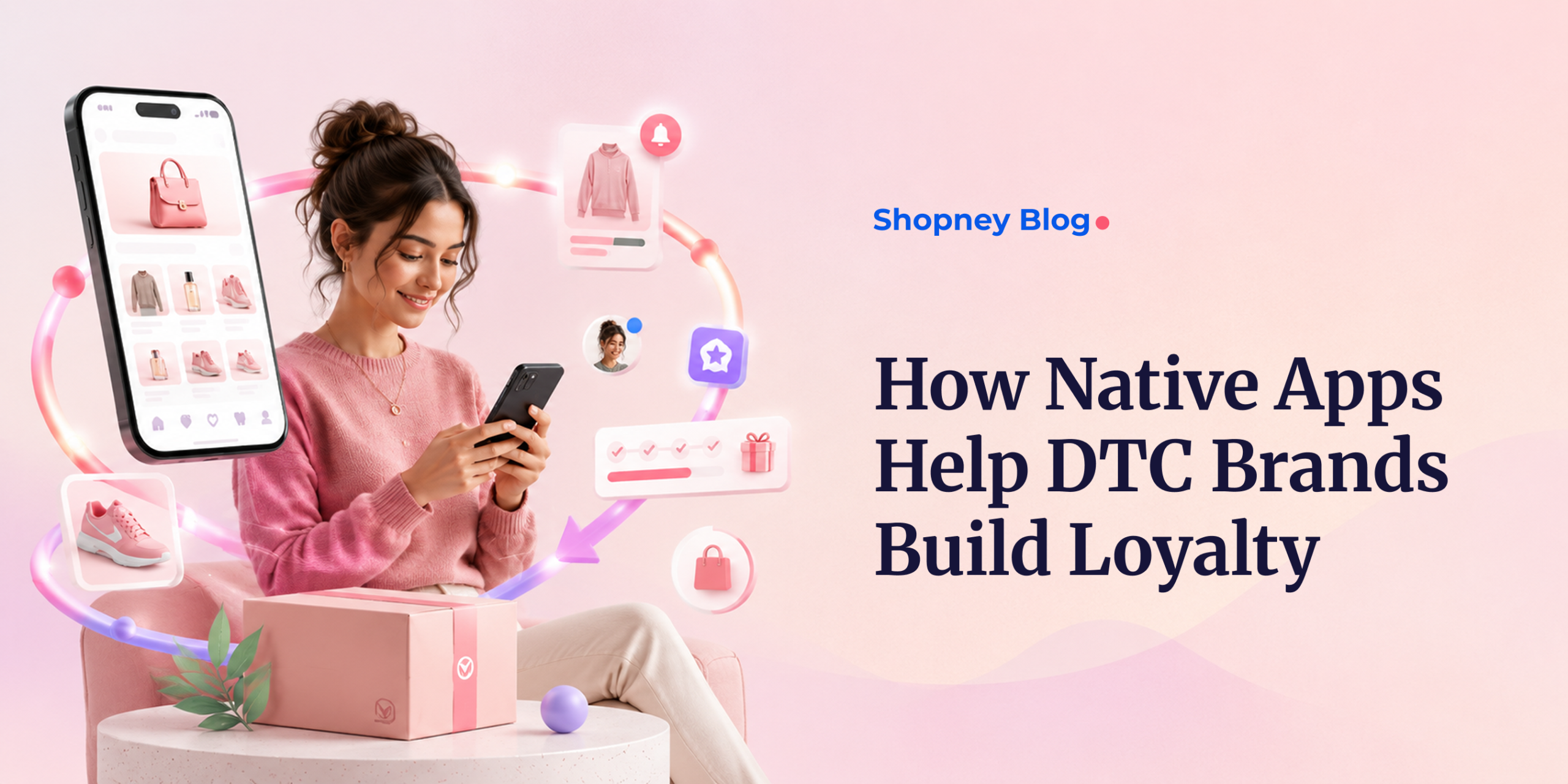

DTC brands sell directly to customers, without depending on distributors, resellers, or marketplaces to own the customer relationship.
This gives them a major advantage.
They can control the brand experience, customer data, communication, and post-purchase relationship more directly. They are closer to the customer before, during, and after the purchase.
But long-term loyalty does not come from launching a mobile app alone.
For DTC brands, loyalty starts with brand recall, trust, product quality, emotional connection, and repeated positive experiences. A loyal customer is not just someone who bought once. A loyal customer is someone who thinks of the brand first when they are ready to buy again.
A native mobile app strengthens this loyalty by making the brand easier to remember, easier to access, and easier to return to. It gives the brand a direct communication channel through push notifications and campaigns, while giving customers a more convenient shopping experience through better UI, saved preferences, loyalty visibility, and faster repeat purchases.
So the role of a native mobile app is not to create loyalty from nothing. It is to make existing loyalty drivers stronger, more frequent, and easier to act on.
For Shopify brands, this is where a mobile app for Shopify can become an important part of the customer relationship. Not because the app replaces the brand experience, but because it helps customers return to that experience more easily.
1. The DTC Brand Model And Direct Customer Relationships
A DTC brand sells directly to the end customer instead of relying mainly on distributors, wholesalers, resellers, marketplaces, or retail middlemen.
In a traditional value chain, a product may move from manufacturer to distributor, then to reseller, then to retailer, and finally to the customer. Each step creates distance between the brand and the person who buys the product.
In a DTC model, that distance is shorter.
The brand can sell through its own ecommerce website, mobile app, physical store, or direct sales channel. This gives the brand more control over the customer experience, brand messaging, pricing, product presentation, customer data, post-purchase communication, retention strategy, and loyalty programs.
This distinction matters because loyalty depends on repeated brand interactions.
If a brand has limited control over how customers discover, buy, and experience the product, it also has limited control over how loyalty is built. But when the brand owns more of the relationship, it has more chances to build trust, stay memorable, and create reasons for customers to return.
This is why DTC brands have a stronger opportunity to build loyalty. They are not only selling through a channel. They are building a direct relationship with the customer.
2. Loyalty Starts With Brand Recall And Emotional Connection
Before talking about mobile apps, it is important to understand how DTC brands build loyalty without an app.
Loyalty does not start with a feature. It starts with the customer’s relationship with the brand.
A loyal customer is not just someone who bought once. A loyal customer is someone who thinks of the brand first when they are ready to buy again.
For a beauty brand, this might mean the customer remembers the same store when they need to restock a product.
For a fashion brand, it might mean the customer checks the same brand first when new arrivals drop.
For a supplement brand, it might mean the customer returns every month without comparing alternatives.
For a pet product brand, it might mean the customer reorders from the same brand because they already trust the product.
This is loyalty in practice.
The brand stays top of mind when the customer is ready for the next purchase.
That usually comes from a combination of product quality, trust, emotional connection, consistent customer experience, reliable delivery, post-purchase satisfaction, and repeated positive interactions.
A mobile app cannot create these foundations by itself.
If customers do not trust the brand, like the product, or remember the experience positively, an app alone will not fix that. It may make the brand more accessible, but it will not automatically make customers loyal.
The loyalty foundation must come from the brand first.
3. Mobile Apps As Loyalty Enhancers
Once the loyalty foundation exists, a native mobile app becomes a powerful enhancer.
It helps the brand stay closer to the customer after the first purchase.
A native app supports loyalty by making the brand easier to access, easier to remember, easier to shop from again, easier to communicate with, easier to personalize, and easier to include in the customer’s routine.
Instead of asking customers to search again, open an email, click an ad, or remember the website manually, the app gives them a direct place to return.
Inside the app, customers can browse products, reorder previous purchases, check rewards, save favorites, track orders, receive updates, access app-exclusive offers, and engage with campaigns.
This makes the customer relationship easier to continue.
The app should not be seen as a separate channel only. It is part of the customer relationship system.
For DTC brands, this matters because the relationship is already direct. The app simply makes that relationship more accessible, more visible, and more active.
This is how native mobile apps can help brands increase customer retention with a mobile app. They do not replace loyalty strategy. They strengthen the moments that keep customers coming back.
4. The Push And Pull Of Mobile Loyalty
Mobile app loyalty works through two forces: push and pull.
Push is brand-initiated engagement.
This includes push notifications, abandoned cart reminders, product drops, back-in-stock alerts, loyalty updates, personalized offers, reorder reminders, and in-app campaigns.
The brand creates a reason for the customer to return.
Pull is customer-initiated engagement.
This happens when the customer chooses to return because the app feels convenient, useful, familiar, and worth opening again. Faster access, saved login, smoother UI, saved preferences, easier checkout, rewards visibility, previous orders, and app-exclusive experiences all support the pull side.
Both forces matter.
Push brings the customer back.
Pull gives the customer a reason to stay and return again.
If the app only pushes messages, it can become annoying. Customers may start ignoring notifications or turn them off completely.
If the app only relies on convenience, the brand may miss important moments to re-engage customers when they are most likely to act.
The strongest mobile loyalty strategy balances both.
The brand uses communication to create timely return moments, while the app experience gives customers a reason to keep coming back. This balance helps brands increase mobile app engagement without turning the app into just another promotional channel.
5. Push Notifications Keep The Brand Top Of Mind
Push notifications are one of the clearest ways native mobile apps support DTC loyalty.
They allow the brand to communicate directly with customers without waiting for them to open an email, search again, click an ad, or visit the website manually.
For DTC brands, this is important because loyalty depends on staying remembered.
A customer may like the brand, but that does not mean they will always remember to return at the right moment. They may get distracted, compare alternatives, or respond to another brand’s campaign first.
Push notifications help reduce that gap.
DTC brands can use them for reorder reminders, product drops, back-in-stock alerts, abandoned cart recovery, loyalty reward updates, app-exclusive offers, personalized recommendations, and post-purchase updates.
The key is relevance.
Push notifications should not only be used for generic promotions or repeated discounts. They should remind customers of something useful, timely, or personally relevant.
A reorder reminder feels different from a random sale message.
A back-in-stock alert for a saved product feels different from a broad campaign.
A loyalty reward update feels different from another discount code.
When notifications are connected to the customer’s actual relationship with the brand, they feel more useful. They help turn brand recall into timely re-engagement.
6. Convenience Makes Repeat Purchases Easier
Loyalty is not only emotional. It is also practical.
Customers often return to the brand that feels easiest to buy from again.
A native mobile app supports loyalty by reducing effort across the repeat shopping journey.
Customers can open the app quickly, stay logged in, find products faster, access saved preferences, reorder previous purchases, check rewards, track orders, and complete checkout with less friction.
These details may seem small, but they matter.
If a customer already likes the product, convenience can make buying again feel natural.
This is especially important for DTC brands that sell products people buy repeatedly, such as beauty, fashion, supplements, food, pet products, home essentials, and lifestyle products.
A customer who needs to restock does not always want to start from zero.
They may not want to search the website, find the same product again, log in again, or rebuild the cart manually.
A mobile app can shorten that journey.
It can make the return path feel familiar, fast, and easy.
This also supports conversion. When repeat shopping feels easier, brands can boost Shopify mobile conversions while giving customers fewer reasons to switch to another brand.
Convenience strengthens loyalty because customers are more likely to return when buying again feels effortless.
7. Personalization Makes Loyalty Feel More Relevant
DTC brands often have stronger access to customer data because they own more of the shopping journey.
They can understand what customers buy, browse, save, reorder, and engage with.
A native mobile app can use this data to create more relevant experiences.
This can include personalized product recommendations, customer-tag-based campaigns, loyalty-based offers, reorder reminders based on purchase history, app-exclusive offers for specific customer segments, personalized push notifications, and product suggestions based on browsing behavior.
Personalization supports loyalty because customers are more likely to return when the experience feels connected to their needs.
A customer who receives a useful reorder reminder, relevant product suggestion, or loyalty update is more likely to feel that the brand understands them.
That feeling matters.
Loyalty becomes stronger when the customer does not feel like they are receiving the same message as everyone else. The more relevant the experience feels, the more useful the app becomes.
For example, a skincare customer may respond better to a routine-based recommendation than a general product promotion.
A fashion customer may engage more with new arrivals that match their past browsing behavior.
A loyal customer may be more likely to act when they see an offer connected to their loyalty status.
Personalization makes loyalty feel more customer-specific and useful.
8. Loyalty Programs Become More Visible Inside The App
Many DTC brands already use loyalty programs, points, rewards, referrals, or VIP tiers.
A native mobile app can make these programs more visible and easier to use.
Instead of customers needing to check an account page, open an email reminder, or interact with a separate loyalty widget, the app can bring loyalty into the main shopping experience.
Customers can easily see their points balance, available rewards, progress toward the next tier, referral benefits, app-exclusive loyalty offers, redeemable discounts, and membership perks.
This makes loyalty feel more active.
The customer does not only hear about the loyalty program occasionally. They see it while browsing, shopping, and returning to the app.
That visibility can strengthen motivation because customers understand what they have earned and what they can unlock next.
A loyalty program becomes more powerful when it is easy to see and easy to act on.
The right Shopify mobile app integrations can also help brands connect loyalty, rewards, reviews, subscriptions, and other retention tools into the mobile app experience.
This turns loyalty from something hidden in the background into something customers can interact with more often.
9. Better Mobile UI Makes Returning Feel Effortless
A better UI supports loyalty because it makes every repeat interaction easier.
For a DTC brand, the app interface should help customers quickly find what they already care about.
This can include new arrivals, bestselling products, previous purchases, subscriptions, rewards, saved items, app-exclusive campaigns, order tracking, support, and personalized product sections.
Good UI helps customers spend less effort and more time engaging with the brand.
Bad UI does the opposite. It creates friction and weakens the value of the app.
The app should not just copy the website into a smaller screen. It should make repeat shopping easier.
This matters because returning customers behave differently from first-time visitors.
They may already know the brand. They may already have a favorite category. They may want to reorder, track an order, use a reward, or check what is new.
A strong app UI should support those actions quickly.
When the app feels simple, familiar, and useful, customers are more likely to keep using it. They do not need to relearn the experience every time.
This is why mobile UI is not only a design issue. It is part of the loyalty experience.
10. Strategy Before Technology
A mobile app is not the loyalty strategy. It is the tool that supports the strategy.
Before launching or optimizing an app, DTC brands need to understand how their loyalty already works.
They should ask:
- Why do customers come back?
- What makes customers remember the brand?
- What makes customers trust the brand?
- Which products drive repeat purchases?
- What emotional connection does the brand create?
- Which customer moments need communication?
- What should be pushed through notifications?
- What should be easier through the app UI?
- Which campaigns support long-term retention?
Without this foundation, brands may build features that do not actually support loyalty.
They may send more notifications without understanding what customers want to hear.
They may add more campaigns without knowing what moments matter.
They may redesign the app without understanding what repeat customers are trying to do.
The strongest mobile app strategies start with customer psychology first, then use technology to support it.
That means the app should be built around the reasons customers already return, not around a random list of features.
Native mobile apps work best when they are built around customer psychology, not just technology.
11. The Right App Features Support Long-Term Loyalty
Once the loyalty strategy is clear, DTC brands can choose app features that support it.
Useful features may include push notifications, in-app campaigns, personalized product recommendations, customer segmentation, loyalty integrations, wishlists, order tracking, app-exclusive discounts, easy checkout, saved customer accounts, reorder journeys, and user-friendly app design.
Each feature should have a clear loyalty purpose.
Push notifications create re-engagement.
In-app campaigns create timely interaction.
Personalization increases relevance.
Loyalty integrations increase visibility.
UI improvements reduce friction.
Reorder journeys make repeat purchases easier.
The point is not to add every feature possible. The point is to choose features that clearly support customer retention, convenience, and repeat engagement.
A feature only matters if it helps make the customer relationship stronger.
This is why DTC brands should evaluate mobile app features based on the loyalty driver they support.
Does the feature help customers remember the brand?
Does it make repeat shopping easier?
Does it make communication more relevant?
Does it make loyalty rewards easier to use?
Does it create a better reason to return?
The best mobile app features are the ones that make existing loyalty drivers stronger, more frequent, and easier to act on.
Conclusion
DTC brands are built around direct customer relationships. This gives them a strong advantage in building loyalty, but loyalty does not come from technology alone.
Long-term customer loyalty starts with brand recall, trust, emotional connection, product quality, and consistent positive experiences.
A native mobile app strengthens that foundation by giving customers a more convenient way to return and giving brands a more direct way to communicate.
Through push notifications, better UI, personalized campaigns, loyalty visibility, and easier repeat shopping, native mobile apps help DTC brands stay top of mind and turn customer relationships into long-term loyalty.
Native mobile apps do not create loyalty from nothing. They help DTC brands reinforce the loyalty they build through strong products, direct relationships, and memorable customer experiences.
To see how Shopney can help your brand build a mobile app that supports loyalty, retention, and repeat purchases, Book a demo with Shopney.
Share this: