

A Shopify brand is not built only by products, ads, or website design.
It is also built by the experiences customers repeat.
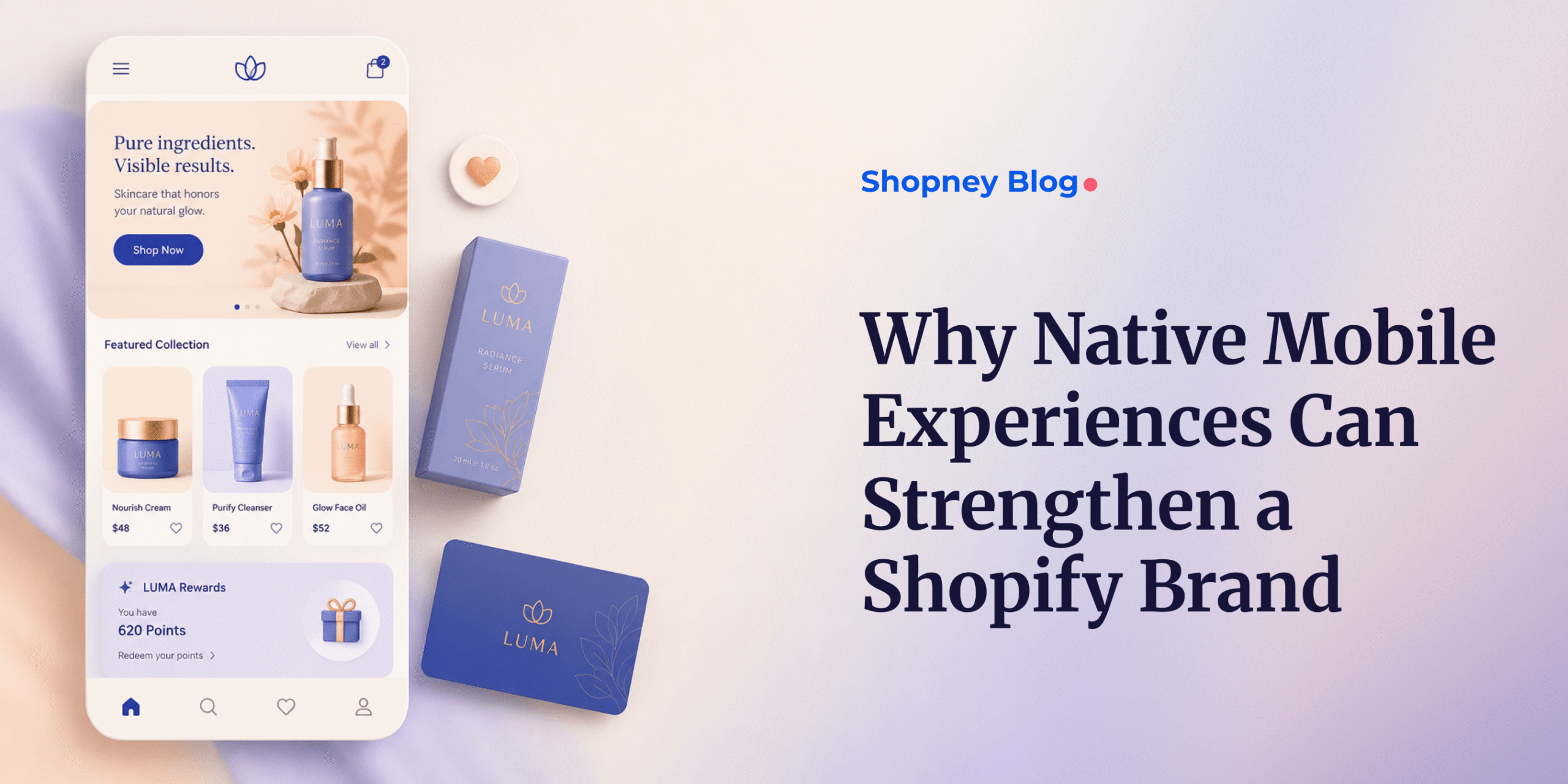
When customers interact with a brand through a native mobile app, the brand becomes easier to access, easier to remember, and easier to return to. The app creates a more direct connection between the brand and the customer because it gives the brand a place on the customer’s device and a more focused mobile shopping environment.
For Shopify merchants, a mobile app for Shopify can be more than another sales channel. It can become a brand experience channel that supports customer engagement, loyalty, personalization, repeat purchases, and long-term retention.
This does not mean every Shopify store needs a native mobile app immediately. But for brands with strong mobile traffic, returning customers, loyalty potential, repeat purchase behavior, or retention goals, a native app can become an important brand asset.
The goal is not only to sell through an app. The goal is to create a mobile experience that helps customers remember the brand, trust it, and return to it more often.
1. A Native App Gives The Brand A Place On The Customer’s Device
A native mobile app gives a Shopify brand a visible place on the customer’s phone.
This matters because customers are surrounded by distractions. They may discover a brand through an ad, social post, email, search result, or influencer recommendation, but that first interaction does not guarantee they will remember the store later.
A native app helps the brand stay closer to the customer after that first interaction. The app icon sits on the customer’s device and creates repeated brand exposure without requiring the customer to search again, open a browser, click another ad, or find the brand through social media.
This presence can strengthen brand recall. When the customer sees the app icon regularly, the brand becomes easier to remember and easier to access.
For Shopify merchants, that visibility is valuable because it gives the brand a more permanent place in the customer’s mobile environment. Instead of depending only on external channels to bring shoppers back, the brand becomes one tap away.
A native app strengthens brand presence by keeping the Shopify brand visible and accessible on the customer’s device.
2. A Branded App Experience Makes The Store More Memorable
A strong brand experience should feel consistent, recognizable, and intentional.
A native mobile app gives Shopify merchants more control over how the mobile shopping experience looks and feels. The brand can shape the app homepage, navigation, product discovery, visuals, campaign placements, loyalty areas, and customer flows in a more focused environment.
This makes the experience feel more branded than a generic mobile browsing session.
When customers open the app, they should immediately feel that they are inside the brand’s own space. The colors, layout, product presentation, campaigns, and shopping journey should all support the same brand identity.
This matters because brand memory is built through repeated, consistent experiences. If customers have a smooth and recognizable experience every time they open the app, the brand becomes easier to remember.
A branded app experience also helps merchants guide attention more clearly. Instead of leaving customers to browse through a crowded mobile website, the app can highlight the most important collections, offers, products, and campaigns in a way that fits the brand’s goals.
A stronger branded app experience helps customers recognize, remember, and connect with the brand more easily.
3. Faster And Easier Shopping Builds Positive Brand Perception
Customers often connect experience quality with brand quality.
If the mobile experience feels slow, confusing, or difficult to use, customers may not only blame the technology. They may also feel that the brand itself is less reliable or less professional.
A native mobile app can help create a smoother shopping journey. Customers can open the app faster, browse familiar sections, stay logged in, access the cart more easily, revisit products, check rewards, and complete repeat purchases with less effort.
This kind of convenience affects how customers feel about the brand.
When the shopping experience feels simple and reliable, the brand feels easier to trust. When customers can quickly find products, return to previous activity, and move toward checkout without friction, the brand feels more customer-friendly.
This is especially important on mobile, where shoppers have limited attention and less patience for complicated journeys.
A native app does not strengthen the brand only because it looks polished. It strengthens the brand because it makes interacting with the brand feel easier.
A smoother mobile shopping experience can improve how customers perceive the Shopify brand.
4. Push Notifications Keep The Brand Top Of Mind
A native mobile app gives Shopify brands a direct way to reach customers after they install the app.
This is where push notifications become important. They help brands stay present between shopping sessions and bring customers back with timely, relevant messages.
Push notifications can support product drops, back-in-stock alerts, cart recovery, reward reminders, app-exclusive offers, win-back messages, reorder reminders, and personalized recommendations.
The value is not in sending more messages. The value is in sending messages that give customers a useful reason to return.
For example, a customer who left an item in the cart may receive a reminder. A loyalty member may receive a reward update. A customer who viewed a sold-out product may receive a back-in-stock alert. A repeat buyer may receive a reorder reminder at the right time.
These moments help the brand stay remembered without relying only on ads, emails, or social media visibility.
When used with relevance, push notifications can strengthen the relationship between the customer and the brand. They remind customers that the brand has something useful, timely, or valuable to offer.
Push notifications help Shopify brands stay top of mind and bring customers back with clear reasons to engage.
5. App-Exclusive Value Makes The Brand Feel More Rewarding
A native app becomes more powerful when customers feel that it gives them something valuable.
If the app feels exactly the same as the website, customers may not have a strong reason to keep opening it. App-exclusive value gives customers a reason to see the app as a preferred brand channel.
This can include app-only discounts, early access to product drops, exclusive collections, loyalty perks, VIP campaigns, limited-time rewards, personalized offers, or special in-app experiences.
The goal is not to discount constantly. The goal is to make the app feel rewarding through convenience, access, relevance, and exclusivity.
For example, a fashion brand can give app users early access to a seasonal collection. A beauty brand can offer app-only bundles. A loyalty-driven brand can make VIP perks easier to access inside the app. A brand with frequent product drops can use the app to create a more exclusive launch experience.
These experiences make customers associate the app with added value.
When customers feel that the app gives them something useful or special, they have a stronger reason to keep it, open it, and return to the brand.
App-exclusive value makes the mobile app feel like a stronger part of the brand experience.
6. Loyalty Becomes More Visible Inside The App
Loyalty programs can strengthen brand relationships, but only when customers can easily see and use them.
If loyalty points, rewards, VIP tiers, referral benefits, or member-only offers are hidden inside account pages or only mentioned in email, customers may forget about them. When customers forget their rewards, loyalty becomes less powerful.
A native mobile app can make loyalty more visible throughout the shopping journey.
Customers can see points, rewards, VIP progress, referral benefits, and exclusive loyalty campaigns more easily. This makes the relationship feel more active because customers can understand what they have earned and what they can use next.
This matters because loyalty is not only about discounts or points. It is about making customers feel recognized and rewarded for continuing to shop with the brand.
A mobile app can help bring that feeling into the everyday shopping experience. Instead of asking customers to remember their benefits, the app can make those benefits easier to access at the right moment.
For Shopify merchants, visible loyalty experiences can support stronger retention and repeat purchases. They give customers a clearer reason to return and continue building a relationship with the brand.
Visible loyalty experiences help customers feel more connected to the Shopify brand.
7. Personalization Makes The Brand Feel More Relevant
A strong brand experience should not feel exactly the same for every customer.
Returning customers have different interests, purchase histories, loyalty statuses, and shopping behaviors. A native mobile app can support a more personal experience by using these signals to guide what customers see, receive, and do next.
This can include personalized product recommendations, customer segments, previous order journeys, wishlist reminders, app behavior-based campaigns, loyalty-based offers, and targeted in-app messages.
A customer who regularly buys skincare should not always see the same experience as someone browsing shoes. A customer who recently viewed a product should not have to search from zero again. A loyalty customer should be able to see relevant rewards and benefits without extra effort.
Personalization makes the brand feel more relevant because the experience reflects the customer’s own behavior.
This is where Shopify mobile app integrations can also support the mobile app experience. Integrations for loyalty, reviews, subscriptions, analytics, marketing, and product discovery can help merchants create a more connected and personalized shopping journey.
When customers feel understood, the brand feels more useful. And when the brand feels useful, customers have a stronger reason to come back.
Personalization strengthens the brand by making customers feel recognized instead of treated like everyone else.
8. Direct Engagement Reduces Dependence On Third-Party Channels
Shopify brands often depend on third-party channels to reach customers.
Ads, search engines, social platforms, marketplaces, and email inboxes can all help brands attract attention. But these channels also come with limitations. Costs can change, visibility can fluctuate, algorithms can shift, and customers can be distracted by competing messages.
A native mobile app gives the brand a more direct owned channel for engagement.
This does not mean a mobile app should replace every other marketing channel. Paid ads, email, SMS, organic search, and social media can still play important roles. But a native app gives Shopify merchants more control over how they communicate with customers who already chose to install the app.
Through push notifications, in-app campaigns, app-exclusive offers, loyalty visibility, and personalized journeys, the brand can create return moments without depending only on external platforms.
This helps strengthen the brand because communication becomes more direct.
The customer is no longer only reachable through rented attention. The brand has its own mobile space where it can guide engagement, highlight campaigns, and bring customers back more easily.
A native app strengthens the brand by giving merchants more control over customer communication and return visits.
9. Repeat Purchases Build Stronger Brand Relationships
A brand becomes stronger when customers choose it again.
First purchases are important, but repeat purchases show that the customer found enough value to return. Each repeat purchase can build more trust, more familiarity, and a stronger relationship with the brand.
Native mobile apps can support repeat purchases by making the return journey easier. Customers can stay logged in, view previous orders, reorder products, access loyalty rewards, receive relevant reminders, respond to app-exclusive campaigns, and discover personalized recommendations.
This is especially valuable for brands with repeat purchase potential, such as beauty, fashion, food, pet products, supplements, home goods, and lifestyle products.
A customer who already bought once should not have to start from zero every time they return. The app can help them continue from previous behavior, find related products, and complete another purchase with less friction.
This is where native apps can support both brand strength and revenue growth. The brand becomes part of the customer’s repeated shopping behavior, not just a one-time transaction.
For Shopify merchants, repeat purchases are closely connected to retention. A native app can help merchants increase customer retention with a mobile app by making it easier for customers to come back and buy again.
Repeat purchases strengthen Shopify brands because customers build trust through repeated positive experiences.
10. A Native App Turns Mobile Shopping Into A Consistent Brand Experience
Consistency is important for brand trust.
A mobile website can be affected by browser behavior, multiple tabs, distractions, loading issues, and different entry points from ads, search, or social media. Customers may enter through different pages and experience the brand in a less controlled way.
A native mobile app gives Shopify brands a more consistent and focused mobile environment.
When customers open the app, they enter a dedicated brand space. The navigation, visuals, campaigns, product discovery, loyalty access, account area, and shopping paths can feel more familiar every time.
This consistency helps customers know what to expect. They understand where to browse, where to find offers, how to access their cart, how to check rewards, and how to return to products they care about.
The more familiar the experience becomes, the easier it is for customers to return.
That repeated familiarity can strengthen brand trust over time. Customers are more likely to feel comfortable with a brand when the experience is predictable, smooth, and easy to use.
A consistent native app experience helps Shopify brands build familiarity and trust over time.
Conclusion
Native mobile apps can strengthen Shopify brands by making the brand more visible, more accessible, more personal, and easier to return to.
They give the brand a place on the customer’s device, create a more controlled mobile shopping experience, support direct communication, make loyalty more visible, enable app-exclusive value, and help customers build repeat shopping habits.
For Shopify merchants, a native app should not be seen only as another sales channel. It can also become a brand experience channel that supports recognition, engagement, loyalty, retention, and long-term customer relationships.
The strongest native app experiences do not only help customers buy once. They help customers remember the brand, return more easily, and keep choosing it over time.
To see how Shopney can help you strengthen your Shopify brand with a native mobile app experience, Book a demo with Shopney.


Share this: