

Customer acquisition is getting more expensive, which makes every repeat purchase more valuable.
For DTC brands on Shopify, retention has traditionally depended on a familiar mix of mobile web, email, SMS, loyalty programs, and paid retargeting.
Those channels still matter. But brands are increasingly looking for more direct ways to keep customers engaged after the first purchase.
That is where mobile commerce is changing the retention model.
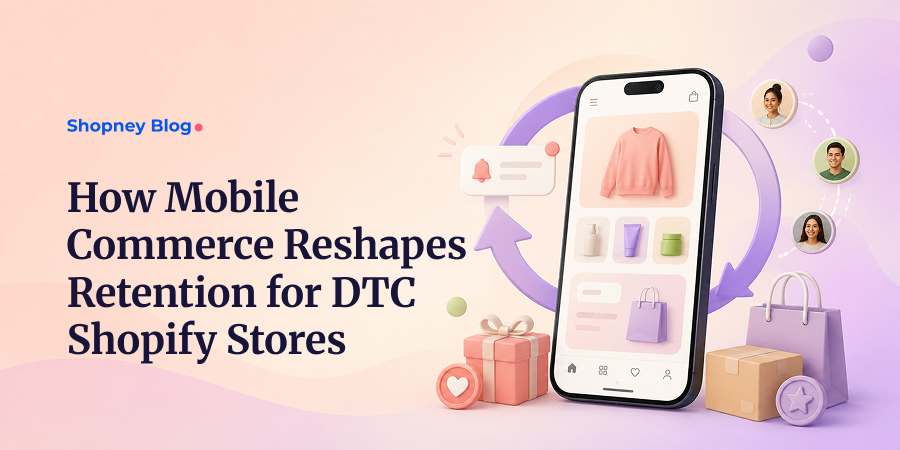
Turning your Shopify store into a mobile app gives high-intent customers an owned place to shop, receive push notifications, access loyalty rewards, discover personalized products, and return to your store more easily.
The traditional DTC retention model is under pressure
For most Shopify DTC brands, the retention journey has looked something like this:
Customer buys → customer leaves → brand sends a marketing campaign → customer hopefully returns.
Mobile-friendly Shopify stores made browsing and checkout easier, especially for traffic coming from social media, search, influencers, and paid ads.
But the mobile website still depends on the customer coming back.
That is why email and SMS became such important retention channels.
Email works well for launches, newsletters, and win-back campaigns. But crowded inboxes make attention harder to earn.
SMS offers stronger visibility, but sending messages at scale can be expensive and not every customer interaction deserves a text.
The challenge for DTC brands is no longer simply reaching customers again.
It is finding a more direct and sustainable way to stay connected with them.
Retention is shifting toward owned customer relationships
As acquisition costs rise, DTC brands are paying more attention to customer lifetime value, repeat purchase rate, purchase frequency, and returning customer revenue.
There is also a growing problem with paid re-engagement.
You may pay Meta, Google, TikTok, or another platform to acquire a customer, then pay again later to reach that same person.
Mobile commerce creates another option.
Instead of relying entirely on external channels to bring customers back, you can create an owned shopping environment that stays accessible on the customer’s phone.
The retention journey becomes:
Purchase → stay connected → receive a relevant reason to return → purchase again.
For Shopify brands, this is where a mobile app becomes more than another storefront.
It becomes a retention channel.
Mobile web drives discovery, mobile apps support repeat engagement.
Mobile websites and mobile apps do not need to serve the same purpose.
A Shopify storefront remains essential for acquisition. It is where new customers arrive through Google, social media, ads, influencers, and direct traffic.
A mobile app becomes more valuable after customers already know the brand.
It gives repeat shoppers faster access to products, saved account information, loyalty rewards, personalized recommendations, and app-exclusive experiences.
That makes mobile apps particularly relevant for DTC brands with:
- Strong repeat-purchase behavior
- Established customer communities
- Loyalty programs
- Frequent product launches
- High mobile traffic
- Customers who already engage regularly with the brand
The goal is not to move every website visitor into an app.
It is to give the most valuable customers a better reason to keep coming back.
Push notifications lower the friction of customer re-engagement
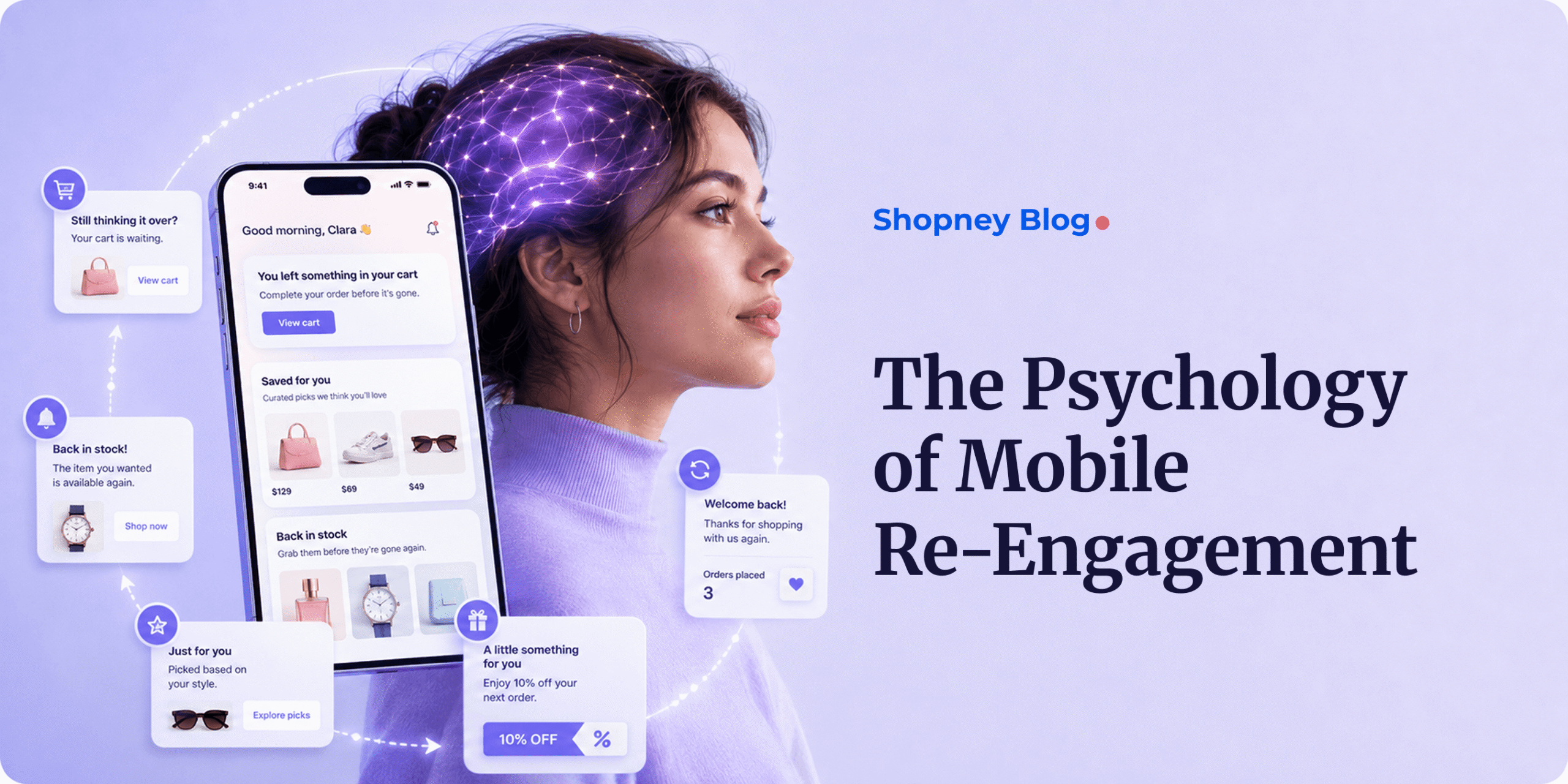
Push notifications are one of the biggest differences between mobile web and mobile apps.
Paid retargeting requires additional media spend. SMS generally carries a cost each time a message is sent.
Push notifications allow Shopify brands to communicate directly with opted-in app users without the same per-message economics.
They can be used for more than discounts, including:
- Back-in-stock alerts
- New product drops
- Abandoned cart reminders
- Loyalty rewards
- Early access
- Personalized recommendations
- Restock alerts
- App-exclusive promotions
This gives brands more flexibility around when and why they reconnect with customers.
Instead of reserving communication for large campaigns, brands can react to smaller customer moments that may lead to another purchase.
Loyalty becomes easier to use when it is part of the shopping experience
Many Shopify DTC brands already use loyalty programs.
The challenge is making sure customers actually remember and use them.
Points can sit unused. Rewards can go unnoticed. VIP benefits may stay hidden inside an account page.
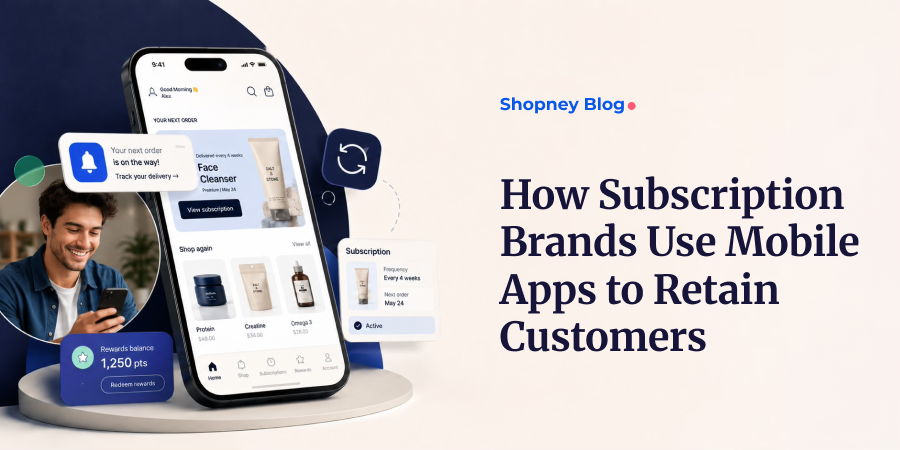
A mobile app can bring loyalty directly into the shopping journey.
Customers can see their points, rewards, VIP status, exclusive offers, and early-access benefits while they browse.
Push notifications can also remind them when a reward is available or when a loyalty benefit becomes relevant.
That moves loyalty from a background program into an active part of the retention experience.
App-exclusive experiences give customers a reason to come back
Strong retention is not only about reminding customers that a brand exists.
It is about creating value worth returning for.
Mobile apps can give repeat customers access to:
- App-only discounts
- Early product access
- Exclusive drops
- VIP collections
- Loyalty rewards
- Personalized recommendations
- Flash sales
- First access to restocks
These experiences can help turn the app into a destination rather than just another sales channel.
For DTC brands in categories such as fashion, beauty, food and beverage, supplements, lifestyle, or accessories, that can be especially valuable because customers already have natural reasons to purchase repeatedly.
Downloads are not the main measure of mobile app success
App downloads matter, but they do not tell a Shopify brand whether the app is improving retention.
The more useful metrics are:
- Repeat purchase rate
- Customer lifetime value
- Purchase frequency
- App conversion rate
- App revenue
- Percentage of eCommerce revenue from the app
- Push-attributed revenue
- Active app users
- Loyalty participation
- App vs. mobile web performance
The real question is not how many people installed the app.
It is whether app customers return more often, convert better, and become more valuable over time.
The new DTC retention stack works together
Mobile apps do not replace email, SMS, or loyalty.
They give each channel a clearer role.
Email works well for longer-form content, newsletters, education, and broader campaigns.
SMS is useful when urgency and visibility matter most.
Push notifications support timely, frequent, low-friction re-engagement.
Loyalty programs reward repeat behavior.
Personalization and AI make the experience more relevant to each customer.
The mobile app can become the owned destination where these retention strategies come together.
A customer might receive a push notification, open the app, see their loyalty balance, browse personalized recommendations, and complete another purchase in the same experience.
That is the bigger opportunity behind mobile commerce.
Final thoughts
For Shopify DTC brands, retention is becoming less about sending more campaigns and more about creating an easier path back to the brand.
The Shopify store still plays a central role in discovery and acquisition. Email and SMS remain important retention tools.
But a mobile app adds something different: an owned environment designed for customers who already know, trust, and buy from the brand.
As acquisition becomes more expensive, that relationship matters more.
The strongest retention strategies will focus less on repeatedly asking customers to return and more on making returning feel natural, relevant, and worthwhile.
If you’re exploring how a mobile app could support your Shopify retention strategy, you can book a demo with Shopney to see how it fits into your existing customer journey.
As one of the best-rated Shopify mobile app builders, Shopney is built specifically for brands looking to turn mobile into a stronger retention channel.
Share this: