

For a subscription brand, the first conversion is only the beginning.
The real value of a subscriber comes from what happens over the following weeks and months.
Do they stay subscribed? Do they keep the same order? Do they add more products? Do they engage with the brand between deliveries? Or does a small inconvenience eventually turn into a cancellation?
This makes customer retention especially important for Shopify subscription brands. The relationship continues long after checkout, and every renewal, shipment, product use, skip, pause, and reorder becomes part of the customer experience.
A mobile app for your Shopify store fits naturally into this relationship because subscribers already have reasons to return. They are not simply visiting a store when they feel like buying something. They are managing an ongoing purchase relationship with a brand.
For the right subscription business, a mobile app can make that relationship easier to manage, easier to communicate around, and more valuable for both the customer and the brand.
Why Subscription Brands Have a Different Retention Challenge
A regular ecommerce customer can buy once and disappear for months. A subscriber usually does not.
Their relationship with the brand continues through recurring payments, upcoming deliveries, product usage, account changes, renewal decisions, and future purchases.
That creates an advantage. Subscription brands already have a reason to stay connected with customers after the first sale.
It also creates more opportunities for friction.
A customer may have too much product before the next delivery. They may want to receive an order later. They may want a different product, a smaller quantity, or a different delivery frequency. Their payment information might change. Their needs might simply be different from when they first subscribed.
None of these situations necessarily mean they want to leave the brand.
This is where Recurpay has observed an important pattern across subscription businesses: the strongest retention opportunities often appear before a customer reaches the cancellation stage. By the time someone opens the cancel flow, the decision may already be largely made.
The bigger opportunity is to make it easy for subscribers to adjust the relationship before frustration builds. Giving customers self-service options to skip, pause, swap, or change their subscription can provide an alternative to cancellation while also giving brands earlier visibility into changes in subscriber behavior.
A pause or adjustment can become an opportunity to re-engage later, rather than the relationship ending altogether.
That is why retention for subscription brands is not only about trying to save a customer at the moment of cancellation. It is about reducing the friction that makes cancellation feel necessary in the first place.
A mobile app can give that ongoing relationship a permanent place on the customer’s phone.
Make Subscription Management Easier Before Friction Turns Into Churn
Think about what a subscriber actually needs after signing up.
Most of the time, they are not looking to browse the entire store again. They may simply want to check when the next order is coming, skip a shipment, change a product, update an address, or add something to their next delivery.
If doing that means finding the website again, logging into an account, locating the subscription section, and working through several pages, a simple task starts to feel like work.
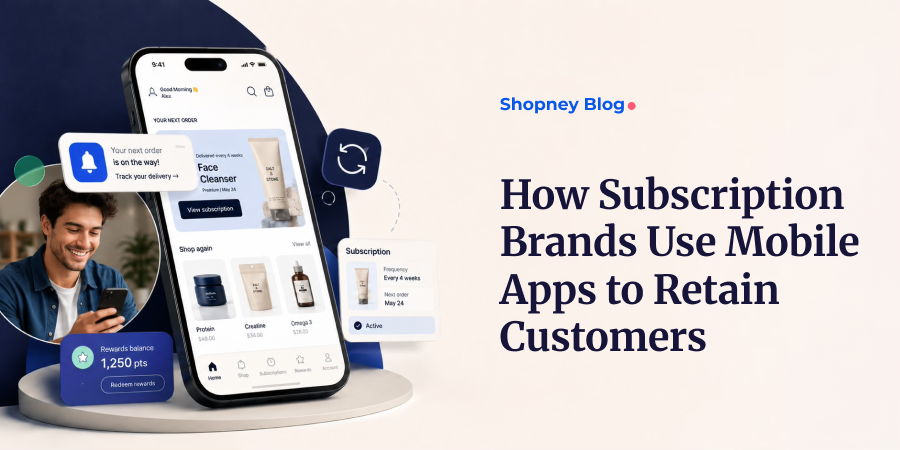
Inside a mobile app, subscription management can be much closer to the customer.
Depending on the subscription setup, customers can access things such as upcoming orders, delivery dates, product selections, quantities, subscription frequency, payment or shipping information, and available subscription actions from the same mobile experience they already use to shop.
That convenience matters most when the alternative is cancellation.
Use the Subscription Cycle to Send More Relevant Push Notifications
Subscription brands know something about their customers that many ecommerce businesses do not: roughly when the next important interaction is going to happen.
There is a renewal date. There is an upcoming shipment. There may be a predictable replenishment period. There is a point when the customer is likely to start using up the product they received.
Those moments create natural reasons to communicate.
Instead of sending promotions simply because a campaign is scheduled for Tuesday, communication can match what is actually happening in the subscription journey.
A customer might receive a reminder before an upcoming order so they have time to make changes. Another notification could arrive shortly before shipment with an opportunity to add a complementary product.
After delivery, the brand might share useful product guidance. Closer to replenishment time, the customer can be reminded that the next order is approaching.
Push notifications are particularly useful here because they can reach customers directly on their phones and bring them back into the app at a relevant moment.
The subscription itself gives the brand a retention calendar. A mobile app gives the brand a direct way to communicate around it.
That does not mean replacing email or SMS. Email can still handle longer communication, and SMS may be useful for selected high priority messages.
Push adds another owned channel that is closely connected to the experience where the customer can actually manage the subscription, browse, or buy.
Increase Subscriber LTV With Smarter Cross-Selling and Upselling
Retention is usually discussed as protecting recurring revenue. For subscription brands, keeping a customer can also create opportunities to grow the value of that relationship.
Imagine a customer already has a $30 monthly order coming.
Before it ships, they see: Your next order ships tomorrow. Want to add anything?
A relevant $15 complementary product does not require another customer acquisition. The customer is already there. The upcoming shipment already exists. The buying intent is easier to create because the recommendation fits into an existing purchase.
That opens the door to one time add ons, complementary products, subscriber bundles, limited releases, seasonal products, and personalized recommendations.
The key is relevance.
The opportunity comes from understanding the subscriber not as one recurring transaction, but as an existing customer with an ongoing set of needs.
A mobile app gives brands more places to surface these recommendations naturally, whether around an upcoming order, inside the shopping experience, or through personalized communication.
Over time, improving the value of existing subscriber relationships can increase customer lifetime value without requiring the brand to acquire a new customer for every additional purchase.
Keep Customers Engaged Between Subscription Orders
One risk of the subscription model is that convenience can make the relationship passive.
The customer subscribes. The product arrives. The payment happens automatically. Unless something goes wrong, there may be little reason to interact with the brand again.
That sounds efficient, but a completely passive subscriber relationship can also become easier to cancel.
A mobile app can create useful reasons to return between purchases.
For products that customers consume or use regularly, that might mean personalized recommendations, rewards, or new product discovery.
The app becomes more useful when it does something between transactions.
There is also a simple advantage to having a place on the customer’s phone. The app icon itself keeps the brand visible, while push notifications can bring customers back when there is a genuinely relevant reason.
For a subscription business built around frequent consumption or recurring routines, that persistent presence can be especially valuable.
Reduce Dependence on Paid Acquisition by Building an Owned Retention Channel
Customer acquisition gets the subscription started. It does not determine how valuable that customer eventually becomes.
If a brand pays to acquire a subscriber and then continues paying advertising platforms every time it wants to reach that same person again, the economics of retention become harder.
A mobile app changes that relationship.
Once a customer chooses to install the app and allow notifications, the brand has a direct channel for future engagement. Upcoming orders, new products, rewards, replenishment reminders, subscriber offers, and other relevant messages can bring customers back without requiring another paid ad impression each time.
This does not make paid acquisition unnecessary. Subscription brands still need ways to attract new customers.
The difference is what happens after acquisition.
Paid media can bring someone into the brand. The app can help the brand continue the relationship once that customer already exists.
For subscription businesses, this distinction is particularly important because so much of the business model depends on revenue generated after the first conversion.
The more valuable the subscriber becomes over time, the more important the channels used to retain and reengage them become as well.
How Shopney Supports Subscription Brands on Shopify
With Shopney as their mobile app builder, brands can connect their existing subscription setup to a branded, high-converting mobile app, allowing customers to manage subscriptions while continuing to shop, discover products, and interact with the brand from the same experience.
Subscription management can also work alongside tools such as push notifications, loyalty programs, product recommendations, cross-selling, and app-exclusive offers.
For Shopify subscription brands, retention depends on making the recurring relationship easy to manage and valuable enough to maintain.
A mobile app can support that by connecting subscription management, timely communication, and repeat purchasing in one experience.
When a Mobile App Makes Sense for a Shopify Subscription Brand
Not every Shopify store with a subscription option automatically needs a mobile app.
The use case becomes much stronger when customers already have reasons to interact with the brand repeatedly.
A mobile app may make sense when the business has:
- An established subscriber base,
- Significant mobile traffic,
- Frequent replenishment or subscription cycles,
- Repeat purchases outside the core subscription, or a strong opportunity to sell complementary products.
It becomes even more relevant when retention and customer lifetime value are major growth priorities.
If subscribers regularly need to manage orders, receive reminders, discover related products, earn rewards, or interact with the brand between deliveries, a mobile app has several useful jobs to do.
The existing Shopify setup matters too. Subscription functionality should work with the systems your Shopify store already uses.
For example, Shopney supports integrations with Shopify subscription solutions including Recurpay, which gives subscribers self-service options to adjust and manage recurring orders rather than making cancellation the only response when their needs change.
Through the Shopney and Recurpay integration, subscription management can be brought into the mobile shopping experience alongside features such as push notifications, cross selling, rewards, product discovery, and customer communication.
This allows the subscription itself and the wider mobile customer experience to work together around the same goal: making the recurring relationship easier to manage and more valuable over time.
A Mobile App Turns Recurring Revenue Into a Recurring Customer Relationship
A subscription guarantees neither retention nor loyalty.
It creates the opportunity for an ongoing relationship. What the brand does with that relationship determines how valuable it becomes.
Customers still need control when their needs change. They still need relevant communication. They still need reasons to stay engaged. And brands still need ways to grow the value of existing customers without constantly starting again with acquisition.
A mobile app brings those needs closer together.
Subscription management can become easier. Communication can follow the actual subscription cycle. Relevant products can appear at the right moments. Customers can remain engaged between deliveries. And the brand gains an owned channel for reaching people who have already chosen to buy from it repeatedly.
For Shopify subscription brands, that is the more useful way to think about a mobile app.
It is not simply another place to sell the same products.
It can become the place where the recurring customer relationship lives.
Share this: