
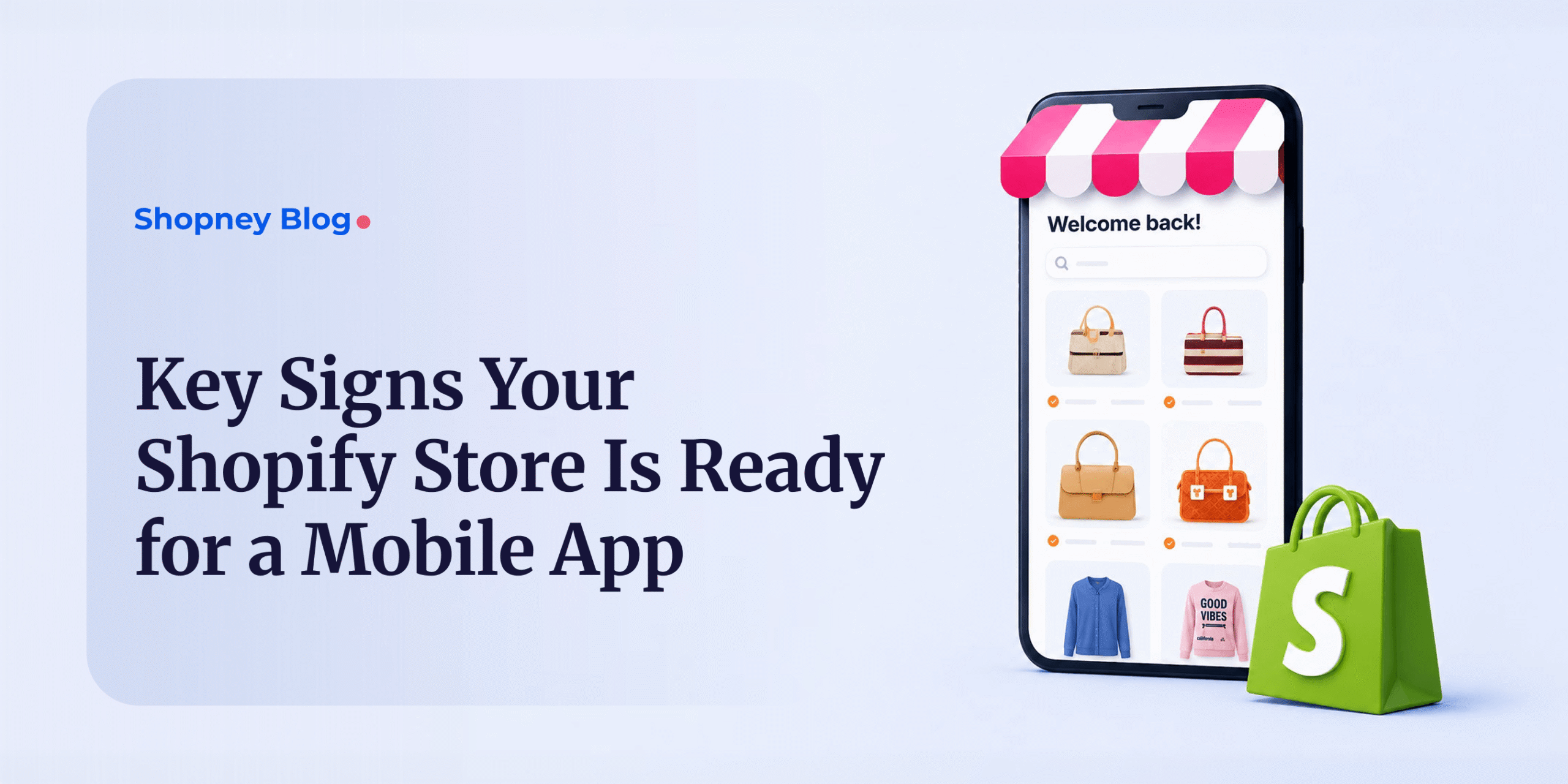

If you’re running a Shopify store, turning it into a mobile app is easier than ever.
But the real question is not whether you can build one.
It is whether your store is ready to benefit from one.
Not every Shopify store gets the same value from a mobile app at the same stage. Launching too early can make the app feel like an extra channel without enough momentum behind it. Launching at the right time can turn it into a powerful growth channel that supports conversion, retention, engagement, and direct customer communication.
So, what makes a Shopify store ready to benefit the most from having a mobile app?
It usually comes down to a few clear signals: consistent mobile traffic, returning customers, an engaged audience, retention activity, and products that naturally encourage repeat purchases.
When these signals are already in place, a mobile app for Shopify becomes more than another shopping channel. It becomes a way to turn existing demand into stronger mobile growth.
1. You Drive Consistent Mobile Traffic
A mobile app does not create demand from nothing. It captures and converts the demand you already have.
Before anything else, your store needs a steady flow of mobile visitors. This is what fuels app installs, engagement, and repeat usage. Without mobile traffic, there is no real foundation to build on.
As a practical signal, many brands start seeing meaningful app potential when they reach around 5,000+ monthly mobile visitors. This is not a strict rule, but it usually means there is enough demand to:
- promote app installs
- test user adoption
- measure performance
- understand mobile shopping behavior
If your store already has consistent mobile traffic, you are not starting from zero. You are optimizing what already exists.
This is where a mobile app starts making sense: turning mobile traffic into higher-value sessions and helping brands boost Shopify mobile conversions with a smoother, more focused shopping experience.
2. You Have a Returning Customer Base
Traffic alone is not enough. What matters is whether customers come back.
When users return to your store, it shows that your brand is building trust, familiarity, and repeat purchase potential. These returning customers are far more likely to install your app and purchase again compared to first-time visitors.
A returning customer rate around 5% or higher can be an early signal of this behavior. As this number grows, so does the potential impact of a mobile app.
That is because mobile apps are retention-driven channels. They work best when shoppers already know the brand and have a reason to come back.
This is where mobile apps can outperform mobile websites: turning repeat visits into repeat purchases.
Instead of waiting for customers to find their way back through email, search, social, or paid ads, an app gives them a faster way to return to your brand and continue shopping.
3. You Have a Strong Social Community
Your social audience is one of your biggest advantages when launching a mobile app.
These are users who already:
- know your brand
- engage with your content
- trust your products
- follow your updates
- respond to your campaigns
That makes them far more likely to install your app compared to cold or first-time visitors.
While it is not a requirement, reaching around 10,000+ followers often signals that your brand has enough reach to promote app installs effectively.
Once users install your app, you are no longer relying only on algorithms or paid reach to connect with them. You have a more direct way to bring them back through push notifications, app-exclusive campaigns, and personalized offers.
This is where an engaged social audience can become the starting point for stronger mobile app growth.
4. Your Retention System Is Ready For The Next Layer
If your store already uses loyalty, rewards, email, SMS, or repeat purchase campaigns, you already have the foundation for stronger customer retention.
A mobile app brings these efforts together in a more accessible and engaging shopping environment. Customers can check their rewards, unlock app-exclusive offers, receive push notifications, and return to your store faster whenever there is a reason to shop again.
This makes your existing retention efforts easier to act on. Instead of loyalty, rewards, and campaigns living across separate touchpoints, the app gives customers one direct place to engage with your brand more often.
This is how brands can retain Shopify customers with a mobile app by making their existing retention systems more accessible, more visible, and easier to engage with.
5. You Already Use Email And SMS Marketing
If your store is actively using email or SMS, you already understand the importance of bringing customers back.
A mobile app builds on this foundation with a more direct channel: push notifications.
Email is valuable, but inboxes are crowded. SMS can be effective, but costs can increase as message volume grows. Push notifications give brands another way to reach customers instantly and directly once they opt in.
This does not mean push notifications replace email or SMS completely. Instead, they strengthen your retention mix.
Email can support longer-form campaigns.
SMS can support urgent or high-priority messages.
Push notifications can support quick, timely, and frequent re-engagement.
For example, brands can use push notifications for:
- product drops
- flash sales
- abandoned cart reminders
- back-in-stock alerts
- app-exclusive offers
- loyalty updates
- price drops
- order updates
This is why many brands use push notifications to reduce marketing costs with a mobile app while maintaining strong customer engagement.
If you are already investing in email and SMS, a mobile app becomes the next direct channel to help you reach customers faster and more efficiently.
6. You Sell Products That Encourage Repeat Purchases
The type of products you sell also plays a major role in timing.
If customers have a natural reason to come back, the value of a mobile app increases significantly. Repeat purchase behavior gives the app more opportunities to create value because customers are not just buying once and leaving.
Best-fit categories often include:
- fashion
- beauty and cosmetics
- food and beverage
- consumables
- supplements
- pet products
- home essentials
- lifestyle products
For example, a fashion brand can use an app to promote new drops, seasonal collections, and app-exclusive offers. A beauty brand can use it for replenishment reminders, product education, and loyalty rewards. A food or consumable brand can use it for repeat ordering, flash campaigns, and push notification reminders.
The more often customers return, the more opportunities you have to increase mobile app engagement and create repeat purchases.
This is where a mobile app becomes more than a shopping tool. It becomes part of the customer’s buying habit.
7. What Happens When Your Store Is Ready?
When these signals are in place, a mobile app becomes a multiplier.
You already have mobile traffic.
You already have returning customers.
You already have an engaged audience.
You already have retention systems.
You already sell products that encourage repeat purchases.
At this stage, a mobile app does not need to create the strategy from scratch. It makes everything you are already doing work better.
You can start seeing value across:
- higher mobile conversion rates
- stronger customer retention
- more frequent repeat purchases
- direct communication through push notifications
- stronger loyalty engagement
- better campaign visibility
- reduced dependency on paid channels
A mobile app does not replace your existing growth strategy. It strengthens it.
It gives your best customers a faster, smoother, and more direct way to shop from your brand. It gives your marketing team another channel to communicate. And it helps you turn existing momentum into long-term mobile growth.
8. Conclusion
Not every Shopify store needs a mobile app at the same stage.
But for stores with the right foundation, it becomes a clear next step.
If you already have consistent mobile traffic, returning customers, an engaged audience, retention systems, and products that encourage repeat purchases, you are in a strong position to get real value from a mobile app.
That’s exactly where Shopney comes in.
Shopney helps Shopify brands turn their stores into high-performing mobile apps without technical complexity, with a focus on increasing conversion, retention, and engagement.
If your store fits this profile, this might be the right time to explore what a mobile app can do for your growth.
Book a demo with Shopney and see how a mobile app would work for your store.
Share this: