

Black Friday 2026 falls on November 27, followed by Cyber Monday on November 30.
If you are only starting your BFCM preparations one month before the event, you probably don’t have time to rebuild your entire ecommerce strategy. But you still have time to influence the things that matter most: your offer, audience, mobile shopping experience, campaign execution, and what happens to those customers after the sale.
And the opportunity is significant. Shopify merchants generated $14.6 billion in sales during BFCM 2025, up 27% from the previous year, with more than 81 million customers buying from Shopify-powered brands.
The bigger lesson, however, is that BFCM is no longer just a four-day weekend.
During the 2025 U.S. holiday season, online shoppers spent more than $4 billion on 25 separate days, compared with 18 days in 2024. Shopify’s 2026 BFCM guidance therefore recommends thinking about a longer promotional period rather than concentrating everything on Black Friday and Cyber Monday.
So if you have 30 days left, don’t spend them panicking.
Use them to build demand before BFCM, prepare your owned channels, including a mobile app for your Shopify store, make purchasing as easy as possible, and create a reason for seasonal shoppers to come back afterward.
Is 30 days enough to prepare for BFCM?
Yes, if you prioritize.
Thirty days is probably too late for major infrastructure changes or months of audience building. It is enough time to finalize your offer, segment existing customers, grow your reachable audience, optimize your mobile shopping journey, prepare lifecycle campaigns, test checkout, and plan your post-BFCM follow-up.
Your goal shouldn’t simply be:
“How much can we sell during BFCM?”
A stronger question is:
“How much demand can we create now, how effectively can we convert it during BFCM, and how many of those customers can we bring back afterward?”
That is what this four-week plan is designed to answer.
WEEK 1: Lock Your Offer, Audience, and Measurement
The first week is about decisions.
Before designing banners or scheduling campaigns, decide what you are selling, to whom, under what conditions, and what success will look like.
Build an offer your margins can support
BFCM does not automatically mean applying the biggest possible discount across your entire catalog.
Decide which products will participate, how much inventory you have available, and how far you can discount without turning additional revenue into weak margins.
Depending on your store, the right offer might be:
- a percentage or fixed discount
- product bundles
- gifts with purchase
- free shipping above a threshold
- loyalty rewards
- early access for VIP or app customers
- app-exclusive products or discounts
Shopify’s 2026 BFCM guidance similarly recommends looking beyond blanket discounts and considering bundles, gifts, and other incentives where they make more commercial sense.
Decide what you want customers to do before BFCM
Don’t wait until Black Friday to start building your audience.
The next 30 days are an opportunity to turn website visitors, social followers, and existing customers into people you can reach directly when the sale begins.
That could mean encouraging them to join your email or SMS list, loyalty program, or download your mobile app in exchange for something meaningful such as early access.
For example:
“Download our app and shop the BFCM collection 24 hours before everyone else.”
This creates a reason to install the app now rather than asking customers to download it simply because you have one.
If you use a mobile app for your Shopify store, make the benefit visible on your website and across your pre-BFCM campaigns.
Define the metrics you will actually review
Set your measurement plan now so you’re not deciding what mattered after the sale.
Alongside total revenue, track metrics such as conversion rate, average order value, new customers, app installs, campaign engagement, cart recovery, repeat purchases, refunds, and returns.
BFCM revenue tells you what happened during the event. Retention tells you how valuable those customers became afterward.
WEEK 2: Build and Activate Your Audience
With your offer decided, Week 2 is about preparing the people you already have rather than sending the same promotion to everyone.
Segment customers by intent
A repeat customer who shops every month shouldn’t receive exactly the same BFCM message as someone who hasn’t purchased from you in a year.
Start with practical groups.
VIP and repeat customers can receive early access or a loyalty benefit.
Recently active shoppers can get previews of the collections or products included in the sale.
Inactive customers need a stronger reason to return.
Cart or browse abandoners can receive reminders related to products they’ve already shown interest in.
New subscribers or app users may need a simple introduction to what your BFCM event will offer.
The goal isn’t to build dozens of tiny segments. It is to avoid treating shoppers with completely different relationships to your brand as though they’re identical.
Give every channel a job
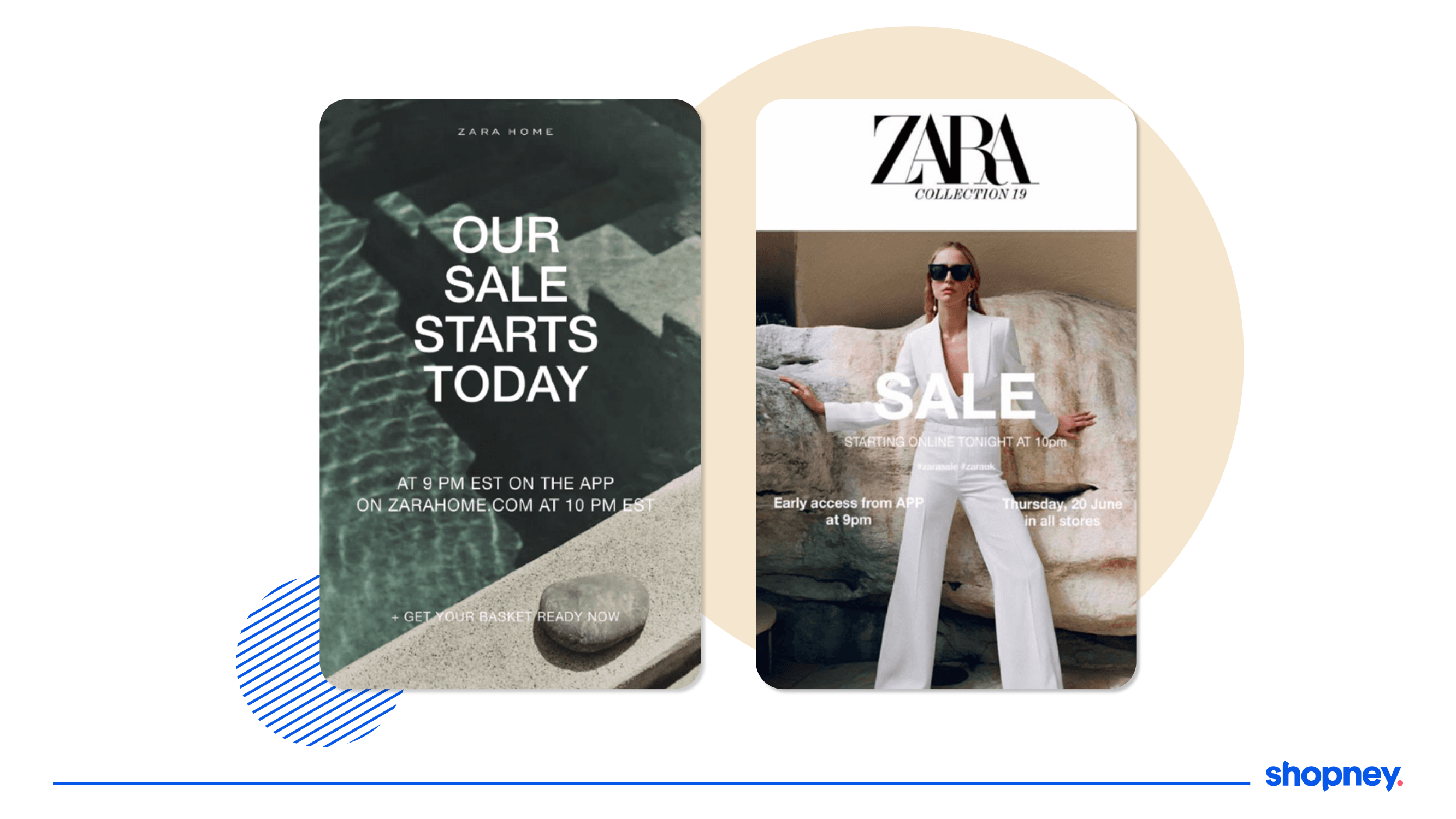
Email, SMS, push notifications, social media, and your website don’t need to repeat the same message at the same time.
Use them together.
| Channel | Best role before BFCM |
|---|---|
| Explain the offer, preview collections, tell the campaign story | |
| SMS | Deliver short, time-sensitive reminders |
| Push notifications | Bring app users back quickly for launches, early access, restocks, or limited offers |
| Social media | Create awareness and anticipation |
| Website | Capture demand and promote your email, SMS, loyalty, or app channels |
| Mobile app | Give high-intent customers a direct shopping and re-engagement channel away from the heavy competition |
The important part is consistency: the offer should make sense wherever the customer encounters it.
Turn BFCM Traffic Into an Owned Audience
BFCM can bring a large spike in traffic. But traffic you cannot reach again loses much of its value after the sale ends.
That is why the month before BFCM shouldn’t only be used to advertise discounts. Use it to strengthen the channels where customers have deliberately chosen to stay connected to your brand.
A branded mobile app can play an important role in this situation because it creates a direct connection with customers who have intentionally installed it.
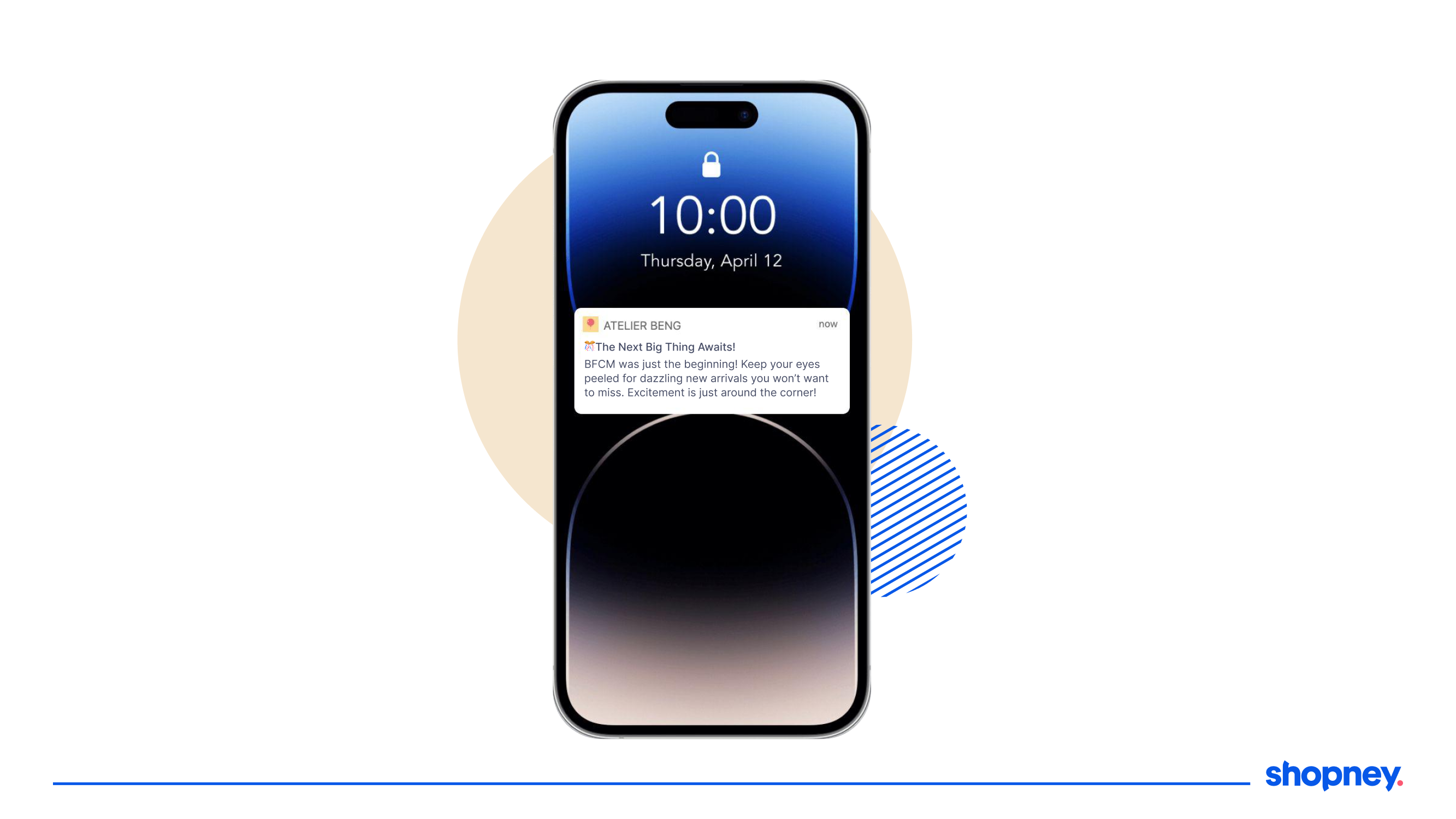
Push notifications can bring those customers back when your BFCM campaign starts, while in-app campaigns can continue the message after they open the app by directing them toward a specific collection, offer, product, or next action.
Shopney, for example, supports both push notifications and in-app campaigns as part of the same mobile shopping journey.
This doesn’t mean every shopper needs to download an app.
The stronger goal is to identify your most engaged customers and give them a clear reason to join a channel that lets you continue the relationship beyond BFCM.
That matters even more when customer acquisition becomes expensive and competitive during peak shopping periods.
WEEK 3: Test the Complete Purchase Journey
One week before your final campaign push is not the time to discover that a discount code doesn’t work or a notification opens the wrong page.
Week 3 should be your quality-assurance week.
And mobile deserves particular attention.
Adobe reported that smartphones accounted for 56.4% of U.S. online holiday revenue between November 1 and December 31, 2025, the highest share recorded for the period.
Whether customers shop through mobile web or your app, test the experience on an actual phone.
Test the complete path to purchase
Don’t test individual components in isolation.
Go through the same journey your customer will:
Campaign → product or collection → cart → discount → checkout → payment → confirmation
Review:
| Area | What to check |
|---|---|
| Mobile storefront/app | Navigation, images, product information, speed |
| Product pages | Price, variants, stock status, sale messaging |
| Discounts | Eligibility, stacking rules, exclusions |
| Cart | Free shipping thresholds, upsells, discount visibility |
| Checkout | Payment options, shipping information, errors |
| Push/email/SMS | Correct segment, message, links, deep links |
| Inventory | Accurate stock across products and variants |
| Tracking | Campaign UTMs, analytics, attribution |
| Recovery | Abandoned-cart and back-in-stock automation |
If you use app-exclusive offers, test those separately from your website promotion.
Also make sure customer support, shipping information, return policies, and expected delivery times are easy to find. BFCM conversion isn’t only a marketing problem; operational uncertainty can create purchasing friction too.
Keep your product information clean
Product discovery is also changing.
Adobe found that traffic from generative AI sources to U.S. retail websites grew 693.4% year over year during the 2025 holiday season.
AI referrals are still only one discovery channel, but the trend gives merchants another reason to keep product titles, descriptions, prices, availability, images, and collection information accurate and easy to understand.
Good product information helps shoppers whether they arrive through Google, social media, your app, or an AI-powered shopping experience.
WEEK 4: Launch, Monitor, and Respond
The final week is about execution.
By now, your core campaigns should be prepared and scheduled so your team can spend BFCM monitoring performance rather than creating everything at the last minute.
Build anticipation before Black Friday
You don’t necessarily have to wait until Friday morning to reveal everything.
Depending on your margins and campaign strategy, you might give VIP customers or app users early access, open selected offers in advance, or begin promoting specific collections before the main event.
The increasingly extended holiday shopping period makes this particularly relevant in 2026.
Respond to behavior instead of endlessly repeating the offer
Once the campaign begins, customer behavior gives you useful signals.
Someone who hasn’t opened your first message might need a different creative angle.
Someone who browsed a sale collection could receive a reminder about that collection.
Someone who abandoned a cart should enter your recovery flow.
Someone who has already purchased usually doesn’t need another five messages telling them that the exact same sale is live.
Move purchasers into your post-purchase journey instead.
Keep your merchandising fresh
Your storefront and mobile app don’t have to look identical for four straight days.
Highlight different collections as inventory changes. Surface products that still have healthy stock. Update banners and showcases when an offer expires or a new one starts.
If an important product sells out, use back-in-stock communication rather than continuing to drive customers toward a dead end.
The goal isn’t constant change for its own sake. It is keeping the shopping experience accurate and relevant throughout the campaign.
AFTER BFCM: Measure the Second Purchase, Not Just the First
When Cyber Monday ends, don’t immediately stop communicating with all the customers you just worked so hard to acquire.
But don’t continue bombarding them with BFCM messages either.
Move into retention.
Thank new customers. Give them useful order and shipping information. Invite them into your loyalty program where relevant. Introduce complementary products or upcoming collections once the timing makes sense.
For app users, push notifications and in-app campaigns can shift from BFCM promotions toward restocks, new arrivals, loyalty benefits, and personalized offers.
More importantly, measure what happens next.
Shopify’s current BFCM guidance recommends looking beyond immediate sales at metrics including repeat purchase rate among new BFCM customers, returns and refunds, post-purchase engagement, customer feedback, and remaining inventory.
Review your new BFCM customers again after 30 and 60 days.
Which acquisition channels produced customers who returned?
Which offer attracted mostly one-time bargain hunters?
Did app users continue engaging?
Which campaigns generated revenue without requiring another paid acquisition?
Takeaway
If BFCM is only 30 days away, focus on what you can still influence.
Build an offer your business can support. Grow and segment your reachable audience. Make the mobile purchase journey frictionless. Prepare your campaigns before the rush. Test everything from the first message to checkout. And decide now how you will communicate with customers after their first purchase.
Most importantly, don’t treat BFCM traffic as the finish line.
Use the season to turn interested shoppers into customers you can reach and serve again.
For Shopify brands with a strong mobile customer base, a branded app can be one of those direct channels—giving shoppers a dedicated place to browse and giving brands tools such as push notifications, app-exclusive offers, and in-app campaigns to continue the relationship beyond the sale.
If you’re preparing your mobile strategy for BFCM, you can explore Shopney or book a demo to see how a Shopify mobile app can fit into your BFCM and post-holiday retention strategy.
Author
Frequently asked questions
When is Black Friday and Cyber Monday in 2026?
Black Friday is Friday, November 27, 2026. Cyber Monday follows on Monday, November 30, 2026.
Is one month enough to prepare for BFCM?
One month is enough to make meaningful improvements if you prioritize. Focus on your offer, inventory, customer segmentation, mobile experience, campaign setup, checkout QA, lifecycle messaging, and post-BFCM retention rather than attempting major projects that require months to execute.
When should Shopify stores start promoting BFCM?
Shopify stores can begin BFCM promotion several weeks before Black Friday, with campaign intensity increasing as the event approaches. If you are starting 30 days before Black Friday, use the first weeks to build awareness and your reachable audience. Shopify's 2026 guidance also recommends planning for a longer holiday sales period rather than treating BFCM as an isolated four-day event.
Should BFCM deals start before Black Friday?
Yes, BFCM deals can start before Black Friday. Brands may offer early access to VIP customers, loyalty members, subscribers, or app users to generate demand before the busiest shopping days. Whether the full discount should begin early depends on inventory, margins, and campaign strategy.
How can Shopify brands retain customers after BFCM?
Start with post-purchase communication rather than another immediate promotion. Then use relevant channels such as email, SMS, loyalty programs, or push notifications to introduce restocks, complementary products, new collections, and personalized offers. Track repeat purchases from your BFCM customer cohort over the following weeks to understand whether the campaign generated lasting customer value.
Share this: