
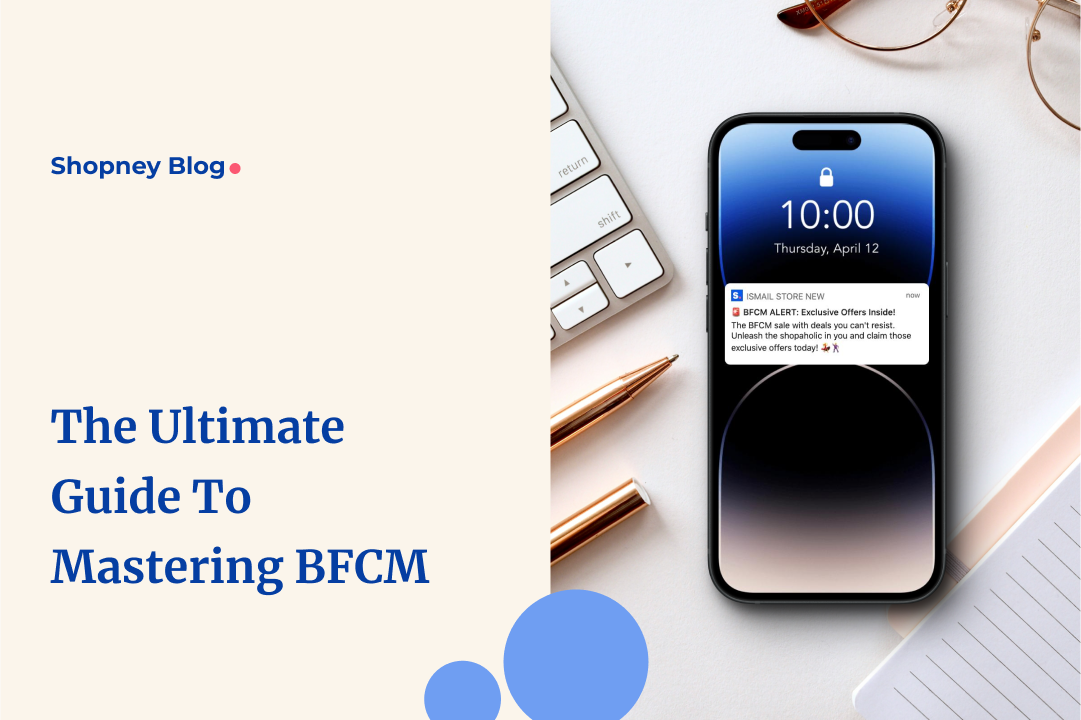

One of the biggest shopping periods of the year for eCommerce brands is coming soon.
As a Shopify merchant, BFCM preparation should begin long before the promotions go live.
Offers, inventory, customer acquisition, mobile experience, communication channels, especially a mobile app for your Shopify store, tracking, and retention all need to be ready before competition peaks.
This BFCM 2026 checklist breaks down what Shopify merchants should prepare and when.
What Is Different About BFCM 2026?
BFCM 2026 is not only about offering a discount.
Shoppers are researching and planning purchases earlier, increasingly using AI to discover and compare products, and facing more choices across mobile, search, social, and other shopping channels.
AI is also becoming a much bigger part of product discovery and purchase decisions. Shoppers are increasingly using AI assistants to research products, compare options, find deals, and narrow down what to buy before visiting a retailer. During the 2025 holiday season, Adobe reported that traffic from generative AI sources to retail sites increased 693.4% year over year, while AI-referred traffic converted 38% better than non-AI traffic on Black Friday.
For merchants, that makes preparation especially important.
Instead of asking only, “What will our Black Friday discount be?”, ask:
- Which customers are we trying to reach?
- Which products will lead the BFCM campaign?
- How will customers discover the offers?
- Is my product information clear, accurate, and structured enough for AI-powered tools to understand and recommend?
- How will we bring interested shoppers back?
- Is our mobile shopping journey ready?
- What happens after the first BFCM purchase?
BFCM 2026 Preparation Timeline
- 6–8 weeks before: Offers, inventory, audience building, mobile readiness
- 3–4 weeks before: Segmentation, campaigns, merchandising, content
- 1–2 weeks before: Testing, checkout, tracking, customer support
- During BFCM: Performance, inventory, communication, optimization
- After BFCM: Retention, re-engagement, analysis
6–8 Weeks Before BFCM: Build the Foundation
Review Last Year’s Performance
Start with your own store data.
Look at:
- Best-selling products
- Conversion rate
- Average order value
- New vs. returning customers
- Highest-performing marketing channels
- Best-performing offers
- Products that sold out
- Cart and checkout abandonment
The goal is to identify what actually worked before deciding what BFCM 2026 should look like.
Decide Your BFCM Offer
Determine early which products will participate and how much margin you can realistically sacrifice.
Your offer might include:
- Percentage discounts
- Product bundles
- Free shipping
- Gifts with purchase
- Buy-more-save-more offers
- Loyalty rewards
- Early access
- App-exclusive offers
A BFCM promotion should feel meaningful to shoppers without requiring you to discount everything in your store.
Forecast Inventory
Identify the products most likely to attract demand.
Consider:
- Previous BFCM sales
- Current best sellers
- Seasonal products
- Hero products in your campaign
- Promotional bundles
- Supplier and replenishment timelines
Also decide what happens when something sells out.
Prepare alternatives, back-in-stock communication, and related product recommendations before inventory becomes a problem.
Tip: Shopify’s Sidekick tool can help you audit your Shopify store before BFCM, and analyze the metrics of your Shopify store products.
Start Building Your Owned Audiences
Do not wait until Black Friday week to start trying to reach customers.
Use the weeks beforehand to grow:
- Email subscribers
- SMS subscribers
- Loyalty members
- Mobile app users
- Push notification subscribers
This matters because BFCM shoppers do not rely on a single channel. Attentive found that 65% of BFCM shoppers subscribe to brands across at least two of email, SMS, and push notifications, showing how naturally customers move between channels while looking for deals.
Your goal should therefore be to build several ways to stay connected before competition peaks.
If a mobile app is part of your BFCM strategy, start promoting it early through your website, email, social channels, and loyalty communications. Once customers have downloaded the app and opted into push notifications, you have a direct way to bring them back for early access, price drops, back-in-stock updates, or time-sensitive BFCM offers.
A mobile app does not replace email, SMS, or paid marketing. It strengthens the mix by giving you another owned channel to reach already-engaged shoppers when ads, inboxes, and social feeds are at their most competitive.
3–4 Weeks Before BFCM: Prepare the Customer Journey
Build Customer Segments
Not every customer needs the same message.
Useful BFCM segments can include:
- New customers
- Repeat buyers
- High-value or VIP customers
- Loyalty members
- Recent product browsers
- Cart abandoners
- Customers interested in particular categories
- Inactive customers
These segments can then shape your email, SMS, advertising, and push notification campaigns.
Build Your Communication Calendar
Decide what customers will hear from you and when.
For example:
Before BFCM: Teasers, product discovery, wishlists, upcoming offers
Early access: Loyalty members, VIP customers, app users
Black Friday: Main promotion
BFCM weekend: Product highlights, reminders, stock updates
Cyber Monday: Final offer or urgency message
Planning this beforehand helps prevent repetitive last-minute messaging.
Prepare Your Mobile Shopping Experience
Mobile deserves its own BFCM QA process.
Adobe reported that smartphones accounted for 56.4% of US online holiday spending during the 2025 holiday season.
For your Shopify store, check:
- Mobile page speed
- Collection navigation
- Product page usability
- Variant selection
- Product availability
- Reviews
- Shipping information
- Discount visibility
- Cart experience
- Checkout
If you have a mobile app, also test:
- Push notification destinations
- Product and collection deep links
- BFCM banners and collections
- Loyalty integrations
- App-exclusive promotions
- Abandoned-cart flows
- Back-in-stock notifications
- Navigation to hero products
- Checkout
A strong campaign cannot compensate for a broken purchase journey.
Prepare Your BFCM Content
Create important campaign assets before peak season begins.
That can include:
- BFCM landing pages
- Homepage banners
- Gift guides
- Product collections
- Email campaigns
- Social media content
- Paid ads
- Push notification copy
- In-app promotions
Keep the offer and core message consistent across channels.
Prepare for AI-Powered Product Discovery
BFCM shoppers are now using AI assistants as part of the research and comparison process.
Make sure important product and store information is clear, accurate, and up to date, including:
- Product titles and descriptions
- Pricing and availability
- Product specifications and benefits
- Shipping and return information
- FAQs
- Reviews and other useful product context
This matters because AI tools need to understand your store and products before they can confidently surface them when shoppers ask for recommendations, comparisons, or deals.
Adobe found in 2026 that retail product pages received an average AI Content Visibility score of just 66%, showing that there is still significant room for retailers to improve how understandable their product content is to AI systems.
1–2 Weeks Before BFCM: Test Everything
At this stage, focus less on introducing new ideas and more on making sure everything already planned works.
Test Discounts and Checkout
Place test orders yourself.
Check:
- Discount codes
- Automatic discounts
- Bundles
- Free-shipping thresholds
- Payment methods
- Taxes
- Shipping rates
- Checkout
- Confirmation emails
Do not assume an offer works simply because it looks correct in Shopify admin.
Check Every Campaign Link
Test the destinations from:
- SMS
- Paid ads
- Social posts
- Push notifications
If you have a mobile app, test deep links as well.
A Black Friday notification that opens the wrong product or collection creates unnecessary friction at exactly the wrong time.
Confirm Analytics Tracking
Make sure you can actually measure BFCM performance.
Review your:
- Shopify Analytics
- GA4
- Advertising platforms
- Email and SMS analytics
- Mobile app analytics
Confirm that the conversion events and metrics you care about are being recorded correctly before peak traffic begins.
Prepare Customer Support
BFCM usually creates more questions about:
- Discounts
- Shipping
- Returns
- Product availability
- Order changes
- Delivery times
Prepare FAQs and make sure your support team understands the promotion before customers start asking.
During BFCM: Monitor and Adjust
Once the campaign launches, the work is not finished.
Monitor Performance
Track:
- Revenue
- Conversion rate
- Average order value
- Best-selling products
- Inventory
- Cart abandonment
- Channel performance
- Campaign engagement
If certain products or offers clearly outperform others, give them more visibility.
Watch Inventory Closely
When popular products begin selling out, react quickly.
Update campaigns, recommend alternatives, and use back-in-stock notifications where relevant.
Avoid continuing to send large amounts of traffic toward something customers can no longer purchase.
Keep Communication Relevant
BFCM does not require sending customers a promotional message every few hours.
Send something when there is a useful reason.
For example:
- Early access is opening
- A promotion has started
- A relevant product has dropped in price
- Something is running low on stock
- A product is back in stock
- A shopper left something in their cart
- Cyber Monday is ending
The goal is relevance, not simply message volume.
After BFCM: Turn Seasonal Shoppers Into Long-Term Customers
BFCM should not end at checkout.
The customers you acquire during BFCM can become much more valuable than a single discounted purchase. Once the peak shopping period is over, the focus should shift from acquisition to retention — giving new shoppers reasons to stay connected, return, and build a longer-term relationship with your brand.
Build Post-BFCM Retention Journeys
Separate first-time BFCM customers from existing buyers and create relevant journeys based on what they purchased, viewed, and engaged with.
Consider:
- Complementary product recommendations
- Loyalty program invitations and rewards
- Review requests
- Replenishment reminders
- New arrivals
- Relevant product updates
- Personalized recommendations
- Win-back campaigns
The goal is not simply to push another discount. Use what you learned during BFCM to continue delivering relevant reasons for customers to return.
Keep Your Mobile Audience Engaged
If BFCM helped grow your mobile app audience, continue giving users reasons to stay engaged.
Use relevant push notifications, personalized recommendations, loyalty benefits, new arrivals, and useful product updates rather than relying only on more discounts.
The goal is to turn BFCM acquisition into long-term retention.
Analyze What Worked
Document:
- Which products performed best
- Which offers converted
- Which channels drove revenue
- Which customer segments responded
- Where shoppers dropped off
- Which promotions protected margin
- Which products sold out
- Which customer-support problems appeared
These insights should become the starting point for your next major ecommerce campaign.
Shopify BFCM 2026 Checklist
Before BFCM begins, make sure you have:
- Reviewed previous BFCM performance
- Defined your goals and offers
- Forecast inventory
- Identified hero products
- Built customer segments
- Started growing owned audiences
- Promoted your mobile app if it is part of your strategy
- Prepared email, SMS, push, paid, and social campaigns
- Optimized your mobile experience
- Tested discounts and checkout
- Tested campaign links and app deep links
- Confirmed analytics tracking
- Prepared customer support
- Planned post-BFCM retention
BFCM can bring a significant increase in demand, but the merchants best positioned to benefit from it are usually the ones that prepare before the rush begins.
Build the audience, offer, customer journey, and retention plan first.
Then, when BFCM arrives, you can focus on selling instead of fixing problems.
Share this: