

Launching a mobile app does not automatically mean customers will install it.
For brands with a Shopify mobile app, increasing app installs usually comes down to three things: reaching the right customers, giving them a clear reason to download, and removing friction between the promotion and the install.
And the download itself should not be the final goal. A valuable app user is someone who installs, opens, shops, and eventually returns.
Here is how to build that journey.
Why Are People Not Installing Your Shopify Mobile App?
Low app installs do not always mean you need more promotion.
Customers may already be seeing the app but have no compelling reason to download it. Others may click through but abandon the App Store or Google Play listing. Some may install and never become active shoppers.
Before adding another marketing channel, identify where the problem is happening:
Awareness → reason to install → store visit → install → first open → purchase → repeat usage
That gives you a much better starting point than simply trying to generate more app-store traffic.
Think of App Installs as a Funnel, Not One Metric
For Shopify brands, some of the best potential app users are already interacting with the business.
They visit the mobile website. They receive marketing emails or SMS. They follow the brand on social media. They may already have loyalty points, previous orders, or products they intend to buy again.
That makes app growth partly a customer-conversion problem, not only a user-acquisition problem.
Track the stages separately.
Store-page conversion rate tells you how effectively your listing turns visitors into downloads.
Cost per install (CPI) tells you what you spend to acquire each paid install.
But go further and measure first purchases, repeat purchases and retention by acquisition source. Ten thousand installs that disappear after one session can be less valuable than a much smaller group of customers who continue shopping through the app.
That distinction is increasingly important. Adjust’s 2026 shopping-app research highlights rising acquisition costs and a larger role for paid installs, making it more important to know which channels generate customers with meaningful long-term value.
1. Give Customers a Real Reason to Download
“Download our app” is not a value proposition.
Explain what becomes better once the customer installs it.
For a Shopify mobile app, that could include app-exclusive offers, early access to new products, easier repeat shopping, loyalty benefits, personalized experiences, or timely product and order updates.
The incentive does not always need to be a discount. In fact, constantly paying customers to install can attract people interested only in the initial offer.
The strongest reason to download is one that also gives customers a reason to keep the app installed.
2. Turn Mobile Website Traffic Into App Users
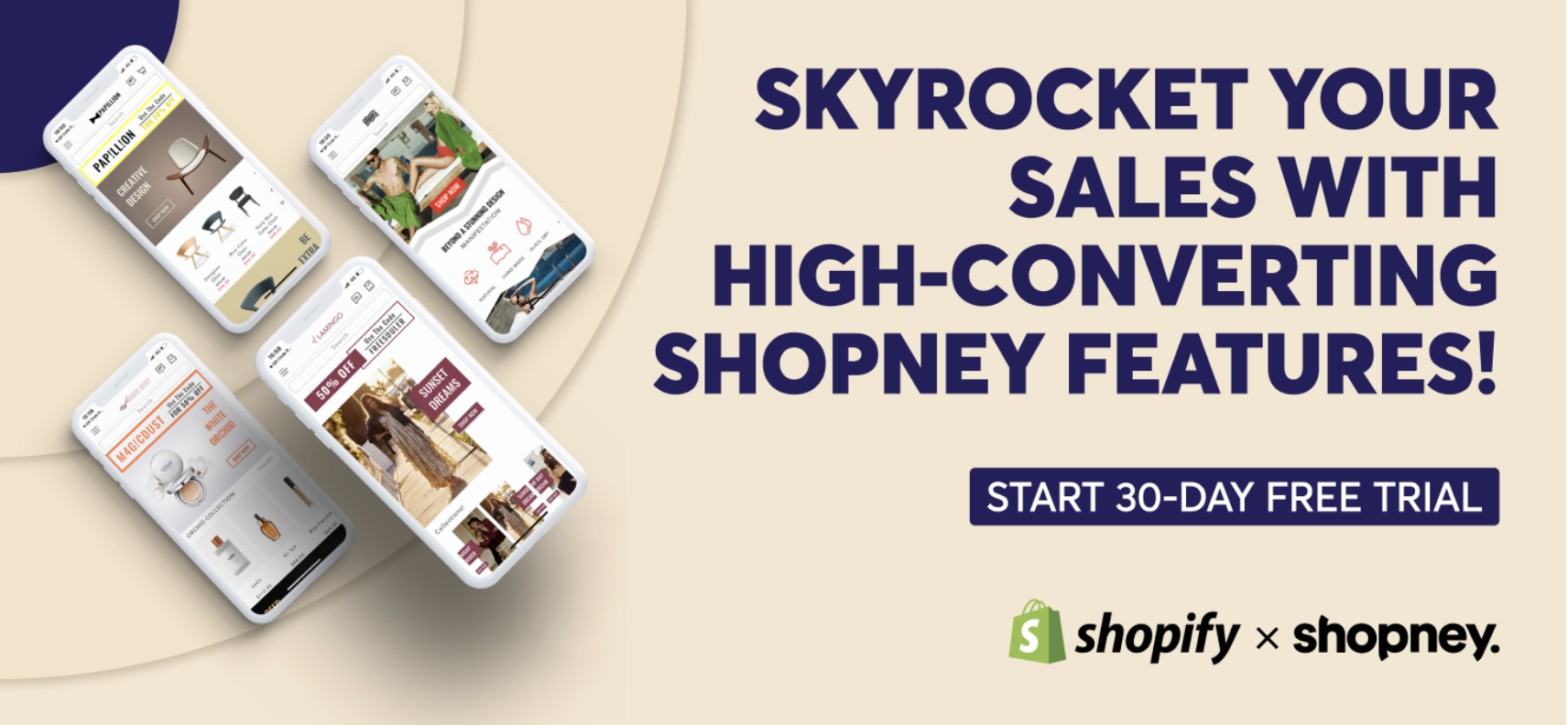
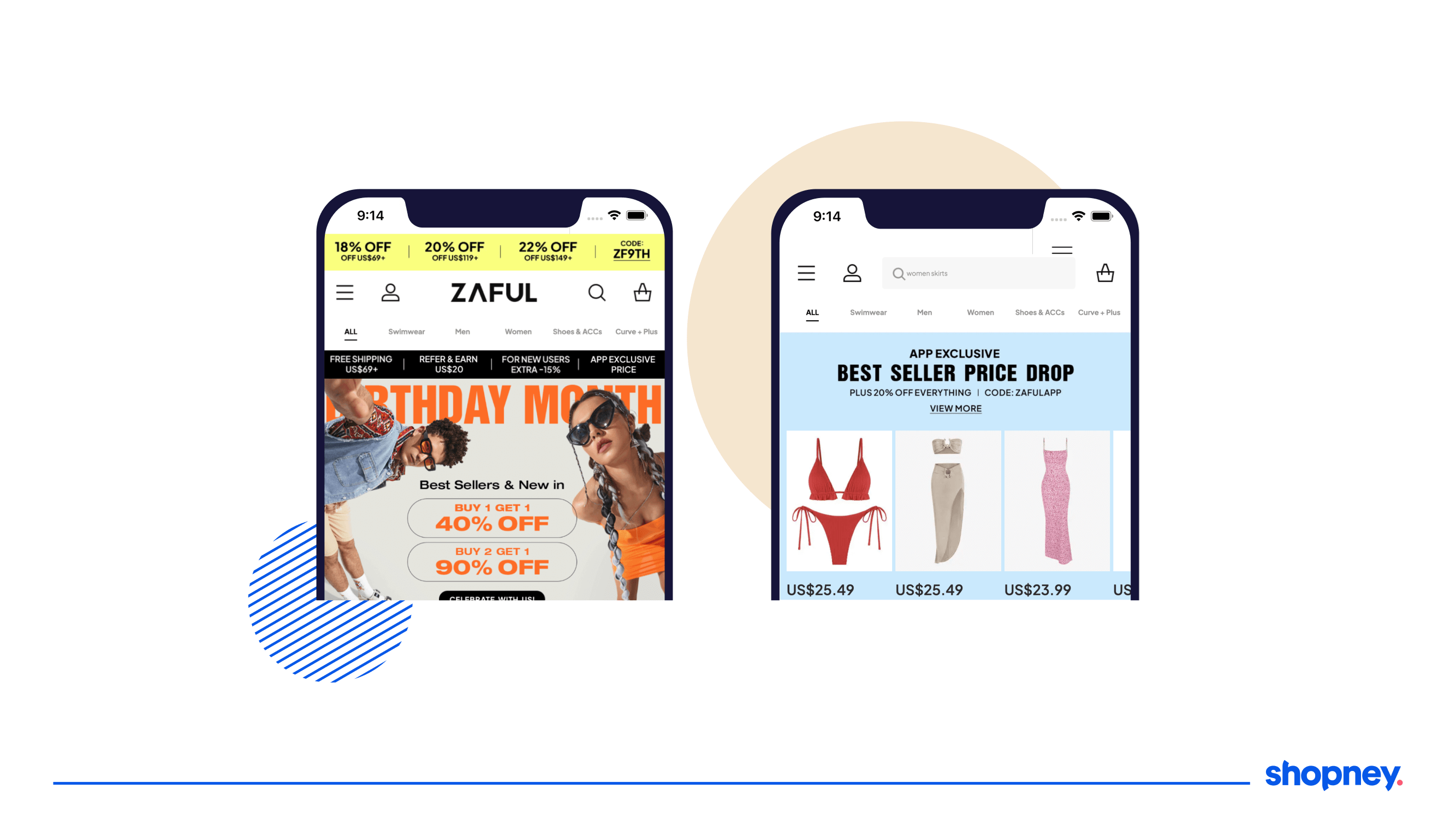
Your mobile website is one of the most natural places to promote your shopping app because visitors already know the brand and are actively browsing its products.
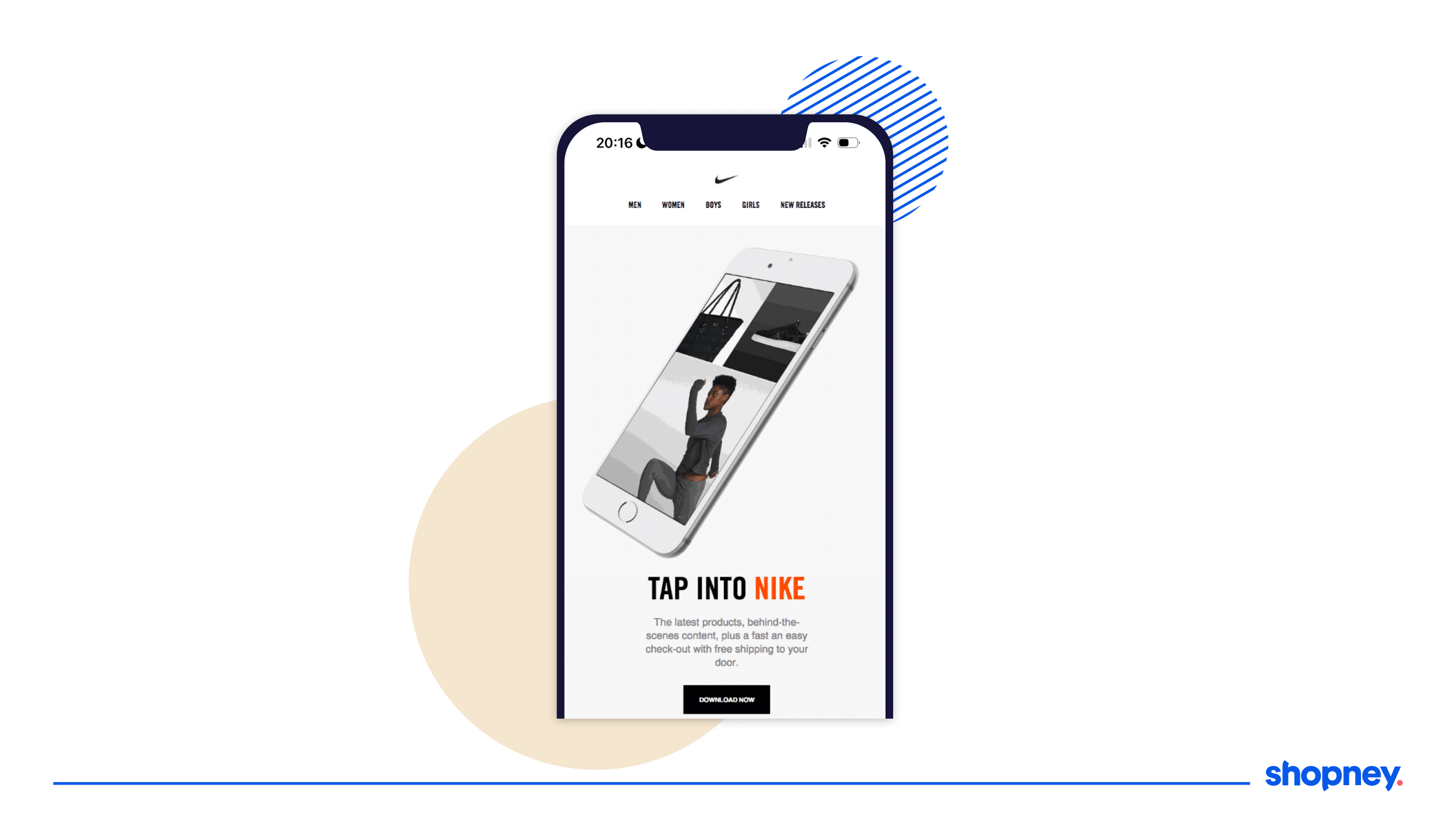
Use a visible but non-disruptive app banner or CTA on mobile pages, and explain the benefit next to the download prompt.
Do not necessarily show the same message everywhere.
A first-time homepage visitor might see a general app benefit. A returning customer could see an app-exclusive offer. A loyalty member might respond better to messaging around rewards or easier access to their account.
For campaigns that need more explanation, create a dedicated app page showing:
- what shoppers can do in the app
- why it is different from the mobile website
- screenshots of the actual experience
- links to the correct store for each device
QR codes can also bridge desktop, packaging and offline touchpoints to the mobile install journey.
3. Optimize Your App Store and Google Play Listings
Getting someone to the store page does not guarantee an install.
Your listing needs to answer a few questions quickly: What is this app? Why should I install it? Can I trust it?
Keep the app name, description and metadata accurate and discoverable, but pay particular attention to the elements shoppers can understand immediately: icon, screenshots, preview video, rating and value proposition.
Then test rather than guess.
Apple’s Product Page Optimization lets developers test alternative icons, screenshots and previews. Apple also supports Custom Product Pages that can show different creative and messaging to different audiences and reports an average 2.5-percentage-point conversion increase when users are referred to a custom page.
Google Play provides similar Store Listing Experiments and custom listings, including listings tailored by country, campaign and search keyword.
Ratings matter too. Apple states that ratings and reviews can influence App Store search ranking and help customers decide whether to download. Ask for reviews after positive moments in the experience rather than immediately after someone opens the app.
4. Promote the App Through Email and SMS
Customers who already subscribe to your marketing are another high-intent audience.
But repeatedly sending “Download our app” is unlikely to work.
Make the app relevant to the message.
If you are announcing a product launch, offer app users early access. If a major sales event is approaching, explain the benefits of having the app before the sale starts. Loyalty customers can be shown app features connected to their rewards or account experience.
Use device-appropriate links wherever possible so the journey from message to app store requires as few steps as possible.
For SMS, only contact customers who have provided the appropriate consent, and follow the requirements that apply in the markets where you operate.
5. Show the App in Use on Social Media
Instead of posting a generic app-store badge, demonstrate what customers can actually do inside the app.
A short video could show a shopper discovering a new collection, redeeming an app-exclusive offer, checking loyalty benefits, or completing a purchase.
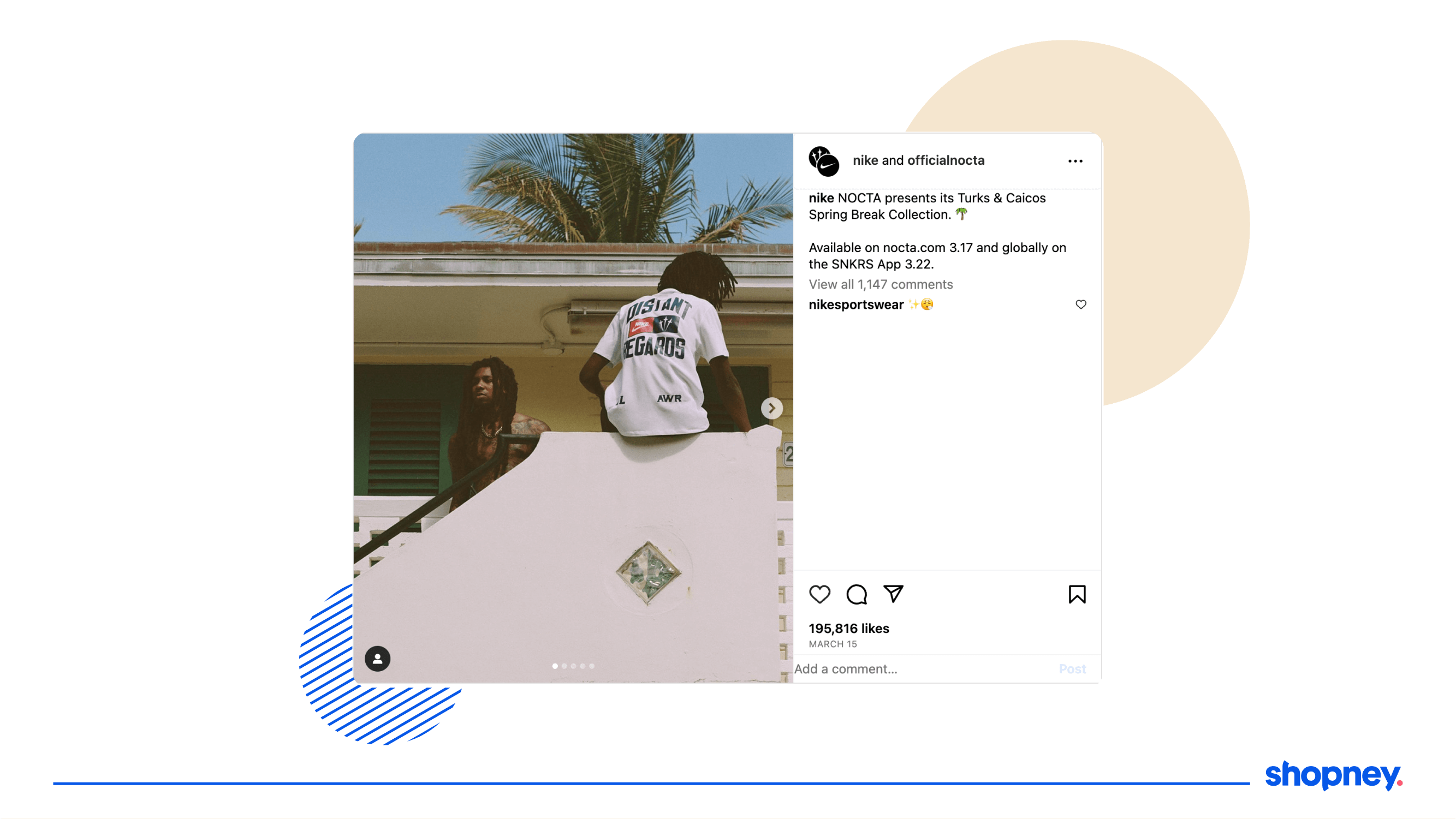
Customer-created content can make this more credible. Reviews, testimonials and demonstrations from real shoppers show potential users why the app is worth space on their phone.
The same applies to creator partnerships. Audience relevance and the creator’s ability to demonstrate a genuine use case matter more than follower count alone.
6. Build Referrals Into Your Growth Loop
Your existing app users can become an acquisition channel themselves.
A referral program can reward customers for introducing friends who become new users or customers. Depending on the brand, the incentive could be store credit, loyalty points, a discount or another benefit.
Track more than referral link clicks. Measure how many referrals become installs and how many eventually become customers.
That prevents the program from rewarding activity that looks good in an acquisition report but produces little business value.
7. Localize the Entire Install Journey
Localization is more than translating the app interface.
If you operate across markets, localize the store listing, screenshots, promotional messages, offers and campaign creative as well.
Both Apple and Google provide tools for adapting store experiences to different audiences and locations. Google Play, for example, allows custom store listings by country and other audience signals, while Apple product-page tests can be run for specific localizations.
Use your own acquisition data to decide where localization investment is justified rather than translating into additional languages simply to increase reach.
8. Scale With Paid App Campaigns
Once the basic install funnel is converting, paid acquisition can expand your reach.
Google App campaigns can optimize for app installs or downstream in-app actions and distribute ads across properties including Search, Google Play, YouTube and the Display Network.
Apple Ads can be useful when shoppers are actively searching in the App Store.
Social platforms can also introduce the app to audiences based on their interests and behaviors.
Whichever channel you use, avoid judging performance only by the cheapest CPI. Compare campaigns based on what happens after installation as well.
A slightly more expensive campaign that produces purchasing, returning customers can be more efficient than one delivering large quantities of low-intent downloads.
9. Measure Qualified Installs, Not Downloads Alone
Your acquisition dashboard should connect app marketing to actual customer behavior.
At minimum, monitor:
- app-store impressions and product-page conversion
- organic versus paid installs
- cost per install
- acquisition source
- first opens and registrations
- first purchases
- retention and repeat purchasing
Apple and Google both provide acquisition reporting that can help diagnose store-page performance, while analytics and attribution platforms can connect acquisition campaigns with later in-app behavior. Google Play specifically recommends looking at which acquisition sources generate the highest-quality impressions and comparing conversion performance over time.
This is ultimately the metric that matters: not how many people downloaded the app, but how many valuable customer relationships the app helped create or strengthen.
What Should You Do First?
Do not launch all nine tactics simultaneously.
Start with the customers and traffic you already have.
First, define a compelling reason to install. Then optimize your App Store and Google Play pages. Promote the app through your mobile website and existing customer channels. Measure which sources produce active shoppers.
Once that funnel works, use referrals, creators and paid acquisition to scale it.
For Shopify brands, this approach turns mobile app promotion from a collection of isolated campaigns into a measurable customer-growth system.
Author
Frequently asked questions
How can I increase app installs for my Shopify store?
Start by giving existing customers a clear reason to download the app, promote it across your mobile website and owned channels, optimize your App Store and Google Play listings, and measure which sources produce active users rather than downloads alone.
Should I offer a discount for downloading my app?
A discount can accelerate adoption, especially around a launch or campaign, but it should not be the only reason to install. Benefits such as early access, loyalty rewards, convenience and app-exclusive experiences may create stronger long-term value.
What is the best channel for promoting a Shopify mobile app?
There is no universal best channel. For many established Shopify brands, existing mobile website traffic, email, SMS and loyalty audiences are logical places to start because these customers already know the brand. Paid acquisition can then expand reach.
Does App Store Optimization increase downloads?
ASO can improve both discovery and the percentage of store visitors who install. Optimize the listing and test screenshots, icons, messaging and localized versions rather than treating ASO as a one-time keyword exercise.
What is a good app install conversion rate?
There is no single benchmark that applies to every Shopify app. Conversion varies by platform, country, traffic source, brand recognition and audience intent. Compare your performance over time and use the benchmarking and acquisition tools available in App Store Connect and Google Play Console where appropriate.
Should I optimize campaigns for installs or purchases?
If sufficient data is available, measure downstream actions such as purchases and retention alongside installs. The cheapest install is not necessarily the most valuable user.

Share this: